

Knowledge Hub
Explore Galápagos Wildlife
Formation & Geology
Seasons & Wildlife
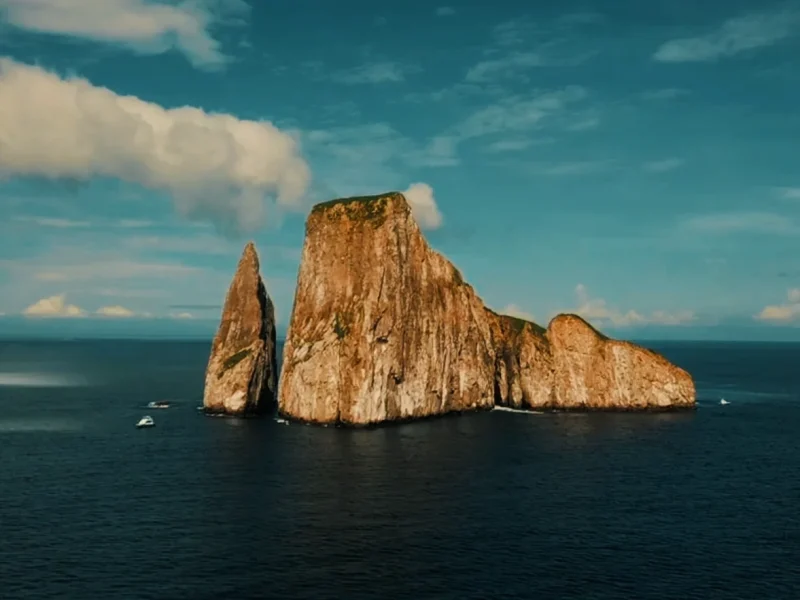
What the archipelago reveals, island by island.
Animals
Content coming soon.
Formation & Geology
Islands
Content coming soon.
Seasons & Wildlife
When to go
The Galápagos change with the ocean currents. Choose a month to see what the islands have in store.
Dec–May · Warm & green season: calm seas, warm water, lush islands
Jun–Nov · Cool & dry season: richer marine life, seabird breeding, livelier seas
January
Warm & green season- Water
- 23–25°C
- Sea
- Calm
- The islands turn green after the first rains
- Green sea turtles come ashore to nest
- Land iguanas begin breeding on Isabela
Green Sea Turtle
Galápagos Land Iguana
February
Warm & green season- Water
- 24–26°C
- Sea
- Calm
- Marine iguanas nest on Santa Cruz
- Flamingos nest in the lagoons of Floreana
- Excellent visibility for snorkeling
Marine Iguana
American Flamingo
March
Warm & green season- Water
- 25–26°C
- Sea
- Calmest of the year
- Warmest water of the year
- Waved albatrosses return to Española
- Marine iguanas nest on Fernandina
Waved Albatross
Marine Iguana
April
Warm & green season- Water
- 24–26°C
- Sea
- Calm
- Waved albatross courtship dances on Española
- Green sea turtle hatchlings reach the sea
- Land iguana eggs hatch on Isabela
Waved Albatross
Green Sea Turtle
Galápagos Land Iguana
May
Warm & green season- Water
- 23–25°C
- Sea
- Calm
- Blue-footed boobies begin courtship on North Seymour
- Waved albatrosses lay their eggs
- Last weeks of the warm season
Blue-footed Booby
Waved Albatross
June
Cool & dry season (garúa)- Water
- 21–23°C
- Sea
- Moderate
- The Humboldt Current cools the sea and feeds marine life
- Giant tortoises move to the lowlands of Santa Cruz to nest
- Whale sharks begin to appear in the far north
Galápagos Giant Tortoise
July
Cool & dry season (garúa)- Water
- 20–22°C
- Sea
- Livelier
- Seabird breeding in full swing
- Blue-footed boobies with chicks on Española and North Seymour
- Dolphins and whales more frequently seen
Blue-footed Booby
August
Cool & dry season (garúa)- Water
- 19–21°C
- Sea
- Livelier
- Nazca boobies nest on Genovesa and Española
- Sea lion pupping season begins
- Galápagos hawks court across the islands
Nazca Booby
Galápagos Sea Lion
September
Cool & dry season (garúa)- Water
- 19–21°C
- Sea
- Livelier
- Coolest water, richest marine life
- Galápagos penguins most active around Bartolomé and Isabela
- Playful sea lions in every bay
Galápagos Penguin
Galápagos Sea Lion
October
Cool & dry season (garúa)- Water
- 19–22°C
- Sea
- Moderate
- Galápagos fur seals begin their breeding season
- Blue-footed boobies raising their young
- Giant tortoises lay their eggs
Galápagos Fur Seal
Blue-footed Booby
Galápagos Giant Tortoise
November
Cool & dry season (garúa)- Water
- 21–23°C
- Sea
- Calming
- Young sea lions play with snorkelers
- Seas settle as the warm season approaches
- Green sea turtles begin to mate
Galápagos Sea Lion
Green Sea Turtle
December
Warm & green season- Water
- 22–24°C
- Sea
- Calm
- Warm season returns and the islands green up
- Giant tortoise hatchlings emerge
- Young waved albatrosses leave Española
Galápagos Giant Tortoise
Green Sea Turtle
Waved Albatross
Water temperatures are typical ranges. There is no bad month in the Galápagos — each season reveals a different side of the islands, and our naturalists will help you choose.
History
A brief history of the archipelago.
From volcanic origin to protected archipelago: how isolation, ocean currents and three centuries of human history shaped the Galápagos into what they are today.
Read the Full History