
Isolated for millions of years, roughly 1,000 km off the coast of South America, the Galápagos produced species that exist nowhere else on Earth. Many of them show no fear of people, which makes every encounter extraordinarily close. Here are ten animals our naturalists are asked about most, and where to find them.
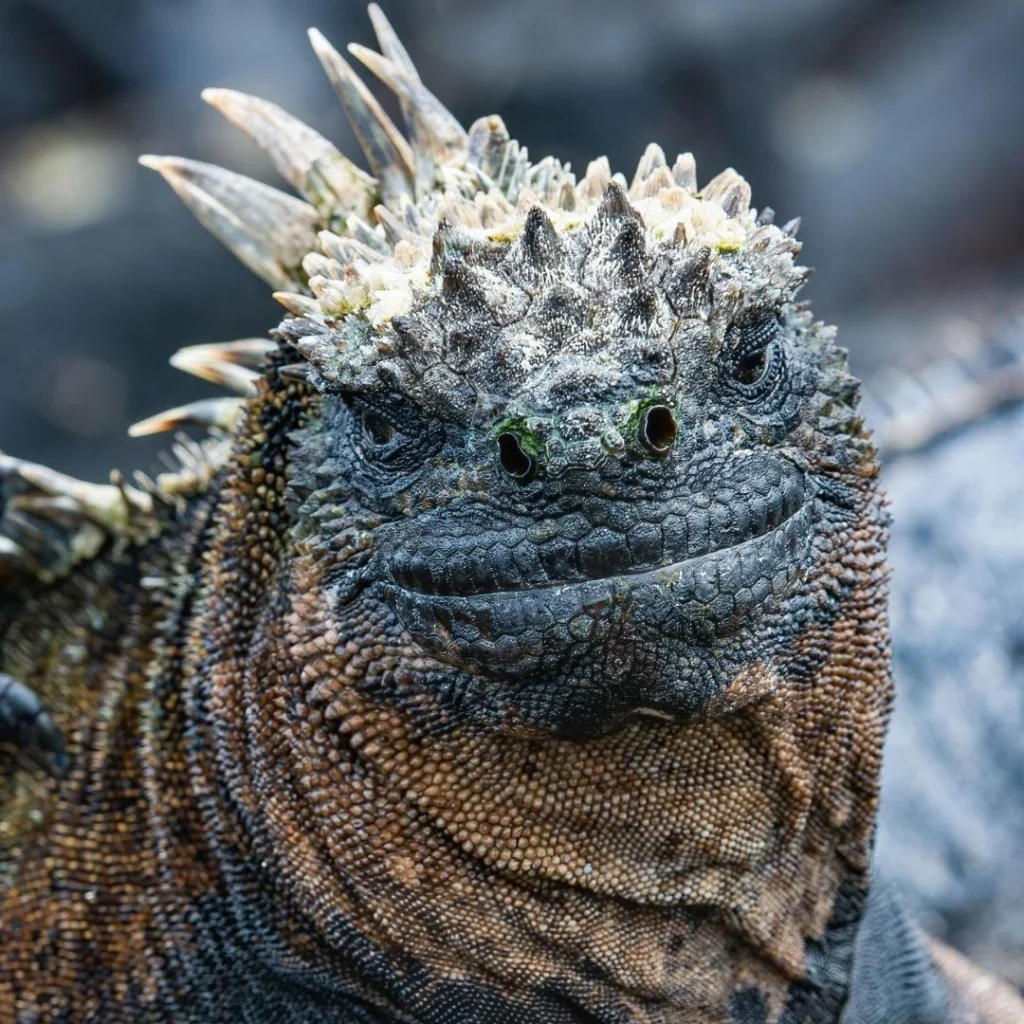
1. The marine iguana
The only lizard in the world that feeds in the sea. Marine iguanas dive into the cold Pacific to graze on algae, then warm themselves on black lava. The largest colonies are on Fernandina and western Isabela; on Española, the males turn red and green in the breeding season. Read more.
2. The Galápagos giant tortoise
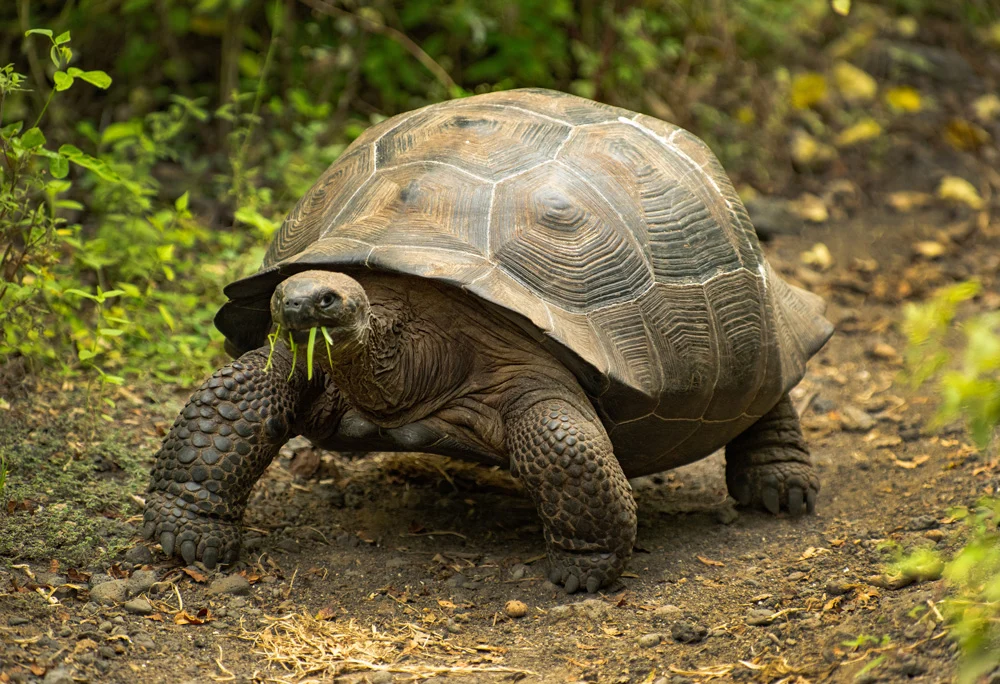
The animal that gave the islands their name, able to weigh more than 250 kg and live well beyond a century. The highlands of Santa Cruz offer the most reliable encounters in the wild. Read more.
3. The Galápagos penguin
The only penguin that lives north of the equator in the wild, and one of the rarest on Earth. It depends on the cold Cromwell Current and is found mainly along western Isabela, around Fernandina and near Bartolomé’s Pinnacle Rock. Read more.
4. The flightless cormorant
A cormorant that gave up flying: with no predators on land and rich fishing close to shore, its wings shrank over generations. It lives only on the coasts of Fernandina and Isabela, which longer itineraries reach.
5. The waved albatross
The largest bird of the islands, and the only albatross that breeds in the tropics. Almost the entire world population nests on Española, from April to December, where its courtship dance is one of the great spectacles of the archipelago. Read more.
6. The Galápagos land iguana
A golden, dragon-like iguana that feeds on cactus pads, spines included. South Plaza and North Seymour offer close encounters; Santa Fe has its own species, found nowhere else. Read more.
7. The Galápagos sea lion
Playful, curious and present on almost every beach, sea lions are often the first to greet snorkelers underwater. Gardner Bay on Española and La Lobería on San Cristóbal host large colonies. Read more.
8. The Galápagos fur seal
Smaller and shyer than the sea lion, the smallest fur seal in the world hides in shaded grottoes and hunts at night. Look for it at Puerto Egas on Santiago and on Genovesa. Read more.
9. Darwin’s finches
Small, mostly brown birds that became one of the clearest examples of evolution: from a single ancestor, more than a dozen species with beaks adapted to seeds, insects or cactus. Several can be seen in a single morning in the highlands. Read more.
10. The Galápagos hawk
The islands’ top land predator, so unafraid that it may land a few meters from a visitor. Santa Fe, Española and Fernandina are good places to see it.
Seeing them all
No single route reaches every species: the flightless cormorant and the largest marine iguana colonies require the western islands, the albatross requires Española between April and December. Tell us which animals matter most to you, and our naturalists will recommend the vessel, the itinerary and the month. Our Knowledge Hub details each species and island.