

Marine Iguana
Overview
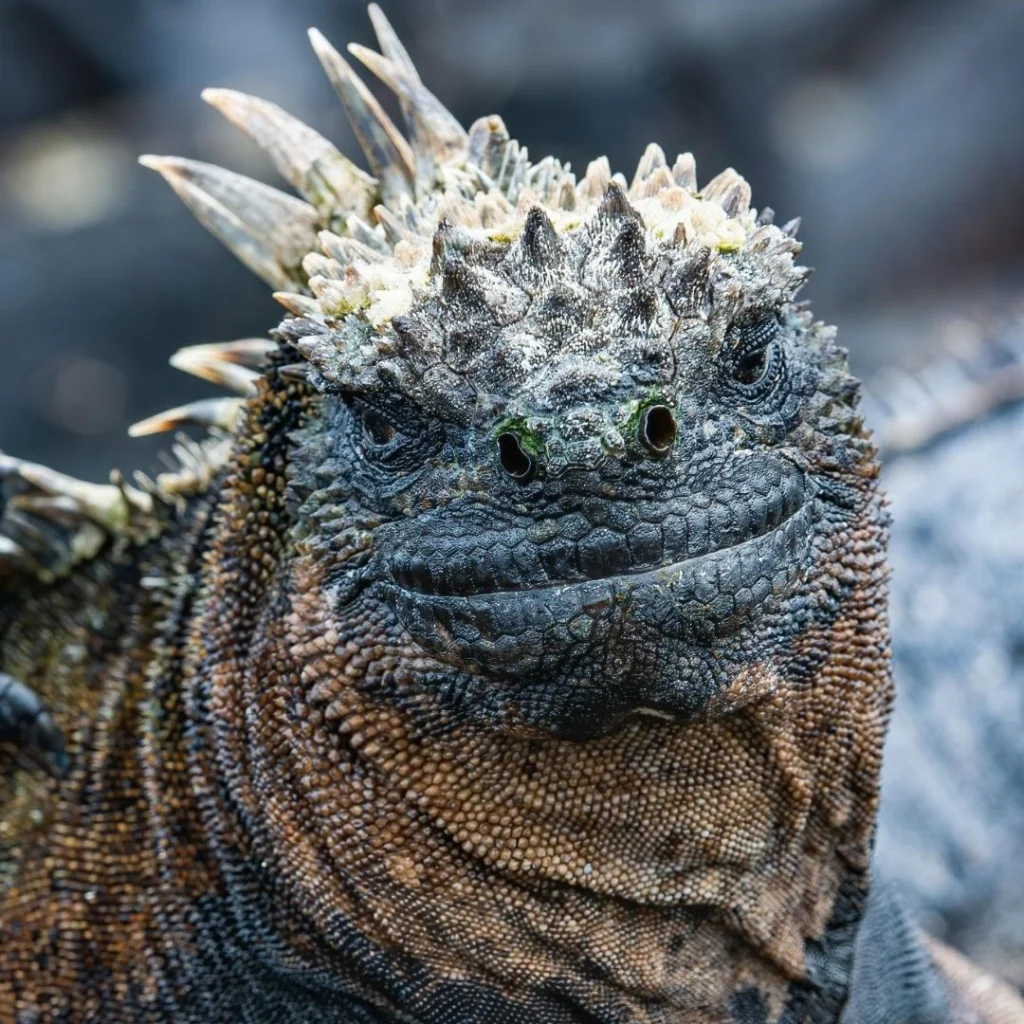
The marine iguana is the world’s only sea-going lizard, found exclusively in the Galápagos. Dark, almost dragon-like in appearance, it divides its time between basking on black volcanic rock and diving into the cold Pacific to graze on algae.
Physical Characteristics
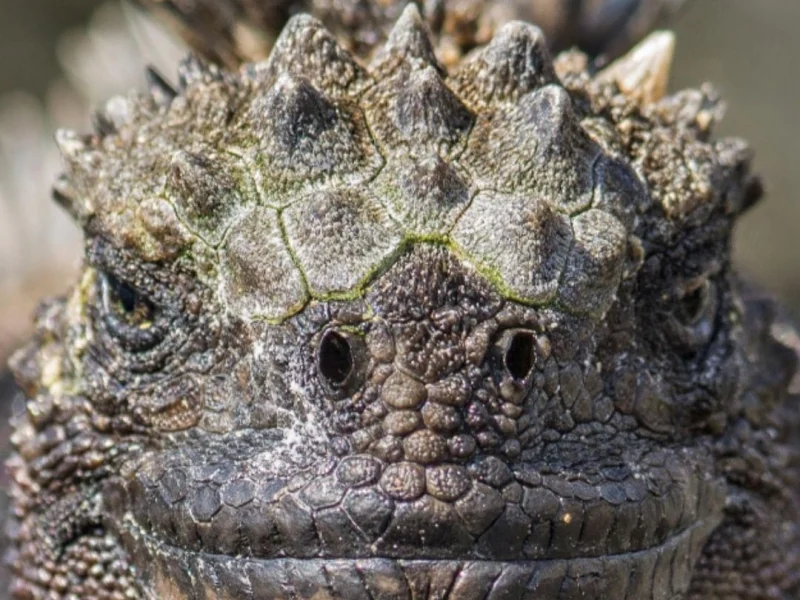
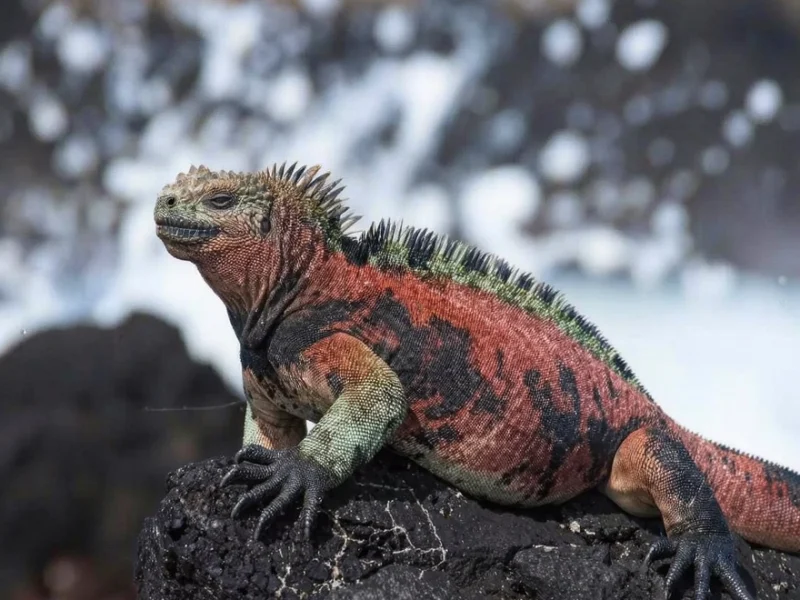
Adults have blackish-grey skin that helps absorb heat quickly after a cold swim; a flattened, oar-like tail built for swimming; a blunt snout adapted for scraping algae off rock; and long claws that grip slick, wave-battered surfaces. Body size varies markedly by island, generally larger where food is more abundant, such as Fernandina and Isabela. During the breeding season, males on Española develop striking red and green patches, giving rise to the nickname “Christmas iguana.”
Habitat
Rocky coastlines and lava fields immediately adjacent to the sea, where dark stone retains heat and the surf brings a steady supply of algae.
Distribution
Found along the coastlines of nearly every island in the archipelago. Several recognized subspecies differ subtly in size and coloration from island to island.
Diet
Almost exclusively marine algae growing on submerged rocks.
Feeding Behaviour
Larger individuals dive to graze algae directly off rocks, with recorded dives to depths of around 9–20 metres lasting several minutes. Smaller iguanas more often forage in the intertidal zone at low tide. After feeding, marine iguanas expel the excess salt they ingest through specialized nasal glands, often visible as a forceful sneeze that leaves a crust of salt on the snout.
Reproduction
Breeding season varies by island, generally falling between December and March. Females dig burrows in sand or volcanic ash and lay one to six eggs, which incubate for roughly three to four months with no further parental care.
Courtship
Males establish and defend small display territories on breeding grounds, using head-bobbing displays to attract females and warn off rivals.
When to Observe It
Visible year-round, often in large groups basking on coastal rocks in the early morning as they warm themselves after a cool night.
Evolution
Marine iguanas descend from mainland iguana ancestors that reached the islands by rafting across the Pacific. Isolated with no comparable competitors, they evolved the only marine foraging lifestyle known among all iguana species — a clear case of adaptive radiation from a single founding population.
Conservation
Listed as Vulnerable by the IUCN. El Niño events, which suppress the cold-water algae the species depends on, can cause mass die-offs; introduced predators such as rats and cats also prey on eggs and hatchlings.
Galápagos Connection
Frequently cited in evolutionary biology as the only sea-going lizard on Earth, and among the clearest examples of how isolation on these islands produced a species found nowhere else.
Naturalist Insight
During severe El Niño events, when their algae food supply collapses, marine iguanas are able to shrink their own body length by reabsorbing bone tissue — then regrow it once conditions improve. It is one of the few documented cases of a vertebrate reversibly shrinking its own skeleton to survive famine.
At a Glance
| Scientific Name | Amblyrhynchus cristatus |
|---|---|
| Typical Size | 50–100+ cm, largest on Fernandina and Isabela |
| Diet | Herbivore — marine algae |
| Conservation Status | Vulnerable (IUCN) |
Observe it on
More Species to Discover
A lifetime of Galápagos knowledge, gathered into one ebook.
Receive the EbookCurated by naturalists born in the Galápagos — see who's behind this knowledge