

Waved Albatross
Overview
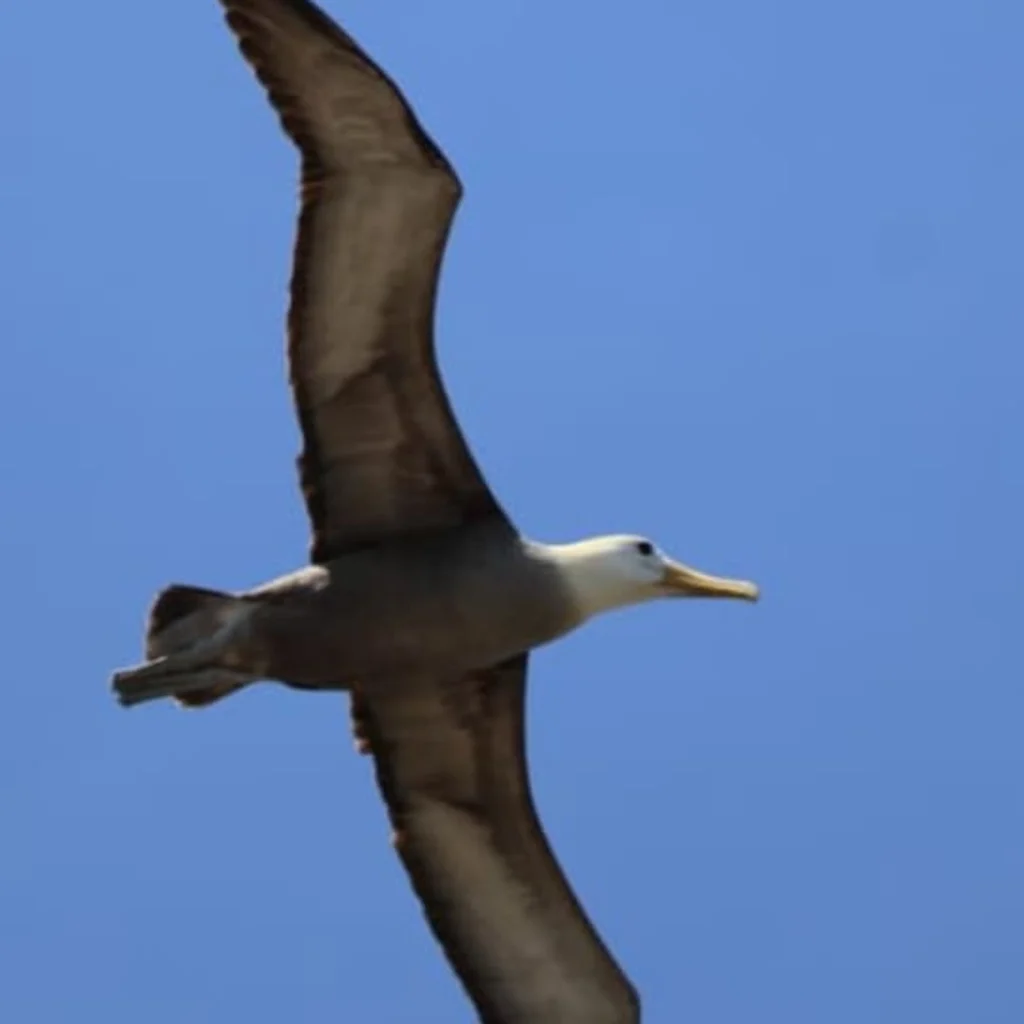
The largest bird in the Galápagos and the only albatross species that breeds in the tropics. Almost the entire world population nests on a single island: Española.
Physical Characteristics
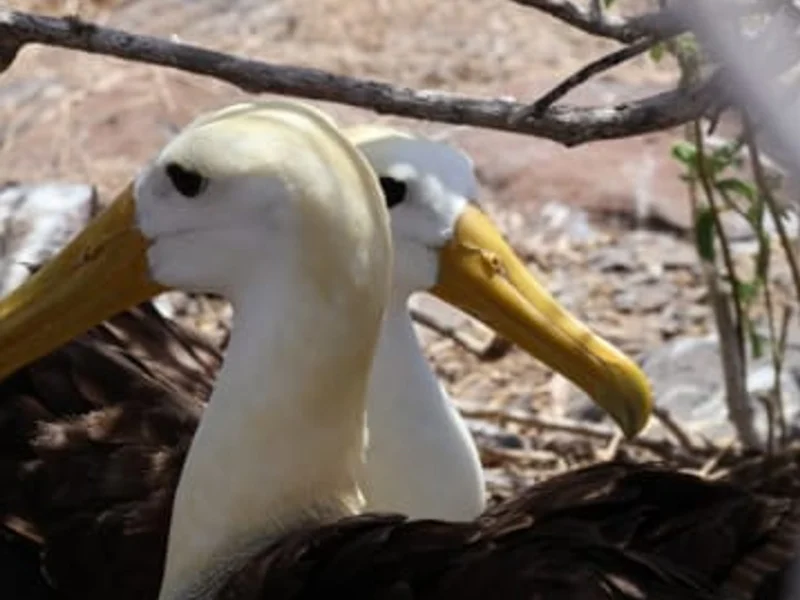
A wingspan of up to 2.3–2.5 metres, a cream-colored head and neck, and a brown body finely marked with wave-like barring — the source of its name — along with a long, pale yellowish bill.
Habitat
Nests on Española’s rocky, sparsely vegetated coastal terrain.
Distribution
Breeding is almost entirely confined to Española, with a very small number of pairs on Isla de la Plata off mainland Ecuador. Outside the breeding season, birds disperse widely over the eastern Pacific as far as Peru.
Diet
Fish, squid, and crustaceans, supplemented by food taken from other seabirds.
Feeding Behaviour
Forages by seizing prey at the surface while floating on the water, and travels vast distances using dynamic soaring over ocean swells.
Reproduction
Lays a single egg per season, typically around April or May. Both parents share roughly two months of incubation and continue to share chick-rearing duties afterward. Pairs are monogamous and often remain together for life.
Courtship
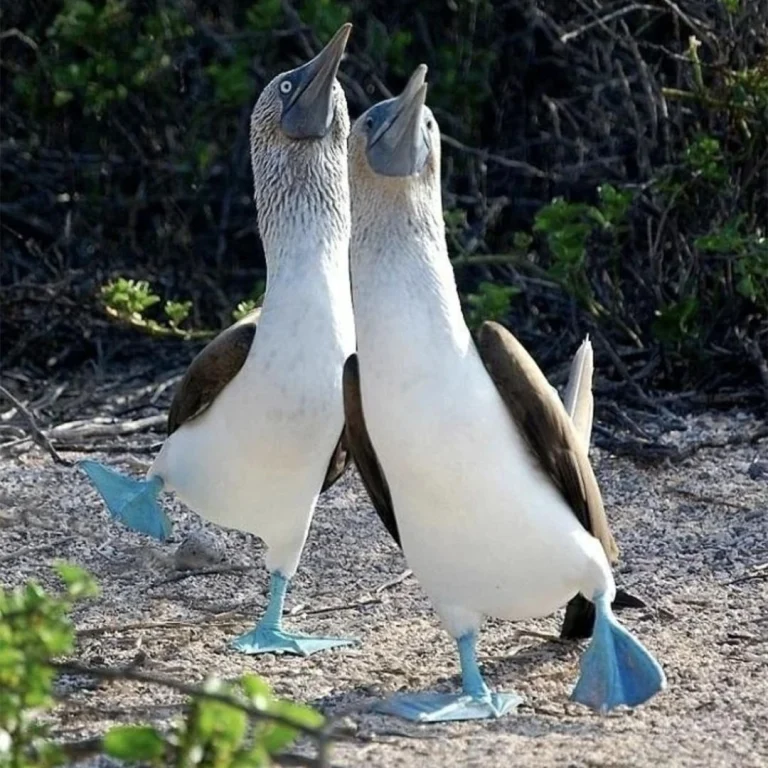
One of the most elaborate courtship displays among seabirds, involving bill circling and clacking, sky-pointing, bowing, and a distinctive side-to-side sway. Young birds often take several years of practice before successfully pairing.
When to Observe It
Present on Española roughly from April to December; birds disperse out to sea for a few months, typically around January to March, once the breeding season ends.
Evolution
The species’ near-total dependence on a single small island is thought to relate to Española’s specific combination of steady onshore winds — needed for such large birds to take off — and its historical lack of ground predators.
Conservation
Listed as Critically Endangered by the IUCN. Longline fishery bycatch across its foraging range and the extremely concentrated breeding population make the species highly vulnerable to any single localized threat.
Galápagos Connection
One of the archipelago’s signature endemic encounters, associated overwhelmingly with a single landing site: Punta Suárez on Española.
Naturalist Insight
Waved albatrosses take off from Española’s cliffs by essentially falling off the edge to catch the wind. Despite ranging over thousands of kilometres of open ocean, the species has never established a comparable breeding colony anywhere else — Española’s wind and cliff geography appear to be, for this bird, effectively irreplaceable.
At a Glance
| Scientific Name | Phoebastria irrorata |
|---|---|
| Typical Size | Wingspan 2.3–2.5 m |
| Diet | Fish, squid, crustaceans |
| Conservation Status | Critically Endangered (IUCN) |
Observe it on
More Species to Discover
A lifetime of Galápagos knowledge, gathered into one ebook.
Receive the EbookCurated by naturalists born in the Galápagos — see who's behind this knowledge