
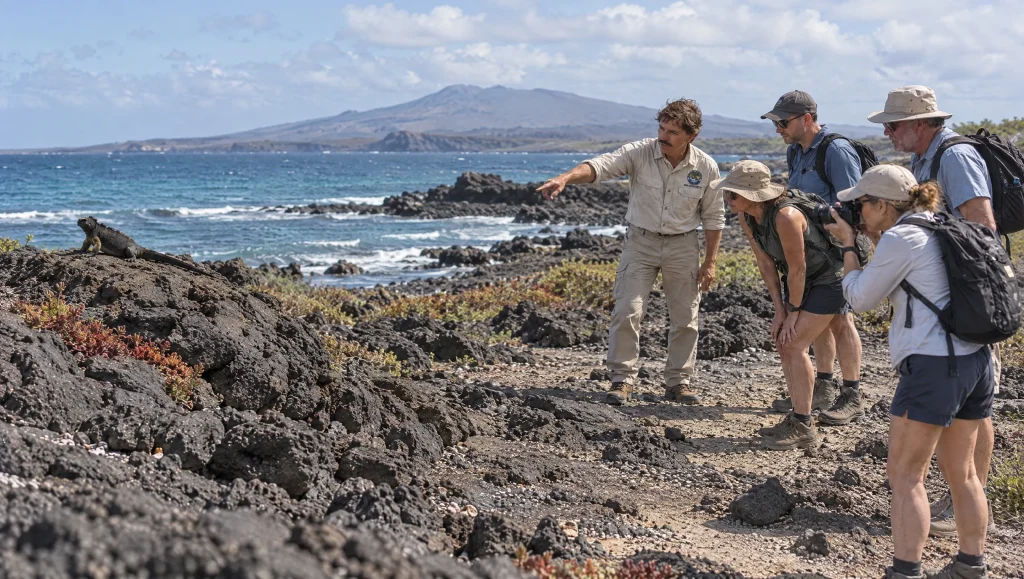
In the Galápagos, no visitor walks a trail alone. Every landing in the National Park is made in the company of a guide licensed by the Park, and that rule has done as much as any other to keep the islands as they are. But a license is a starting point, not a measure of depth. The guide beside you decides whether a landing is a walk past remarkable animals or the moment you finally understand them.
Three levels, one standard of excellence
The Galápagos National Park licenses its naturalist guides at three levels. Level III, the highest, is held by a small number of guides who combine long experience in the field, advanced training and mastery of the languages of their guests. It is the level the Park entrusts with the most demanding itineraries. Samuel and John, the founders of Galápagos Redefined, both hold it.
The title matters less than what it represents: decades of returning to the same colonies in every season, of watching how a species behaves before the rains and after them, of learning what a landscape says about the age of the lava beneath it.
Seeing is easy; understanding takes a lifetime
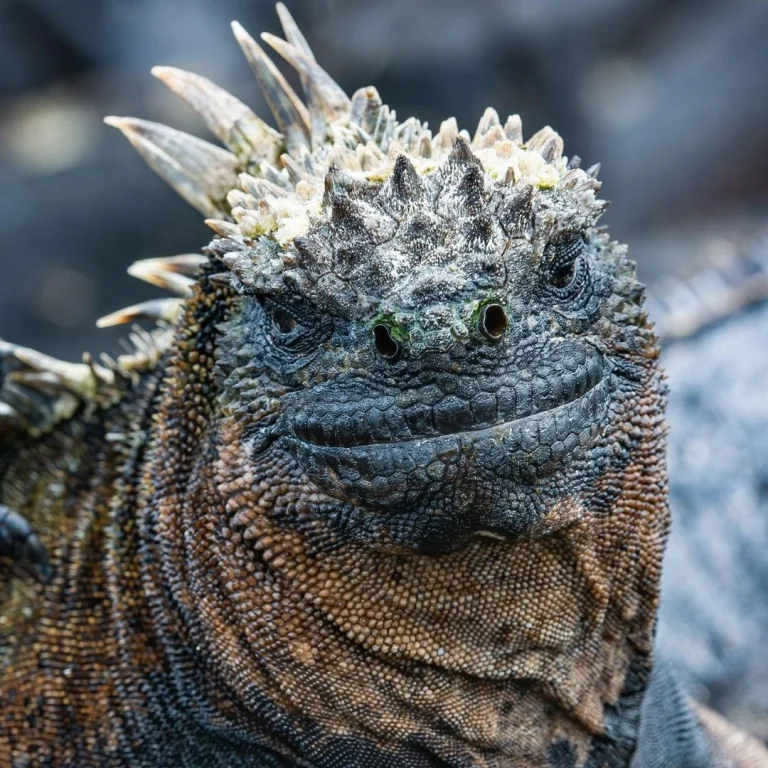
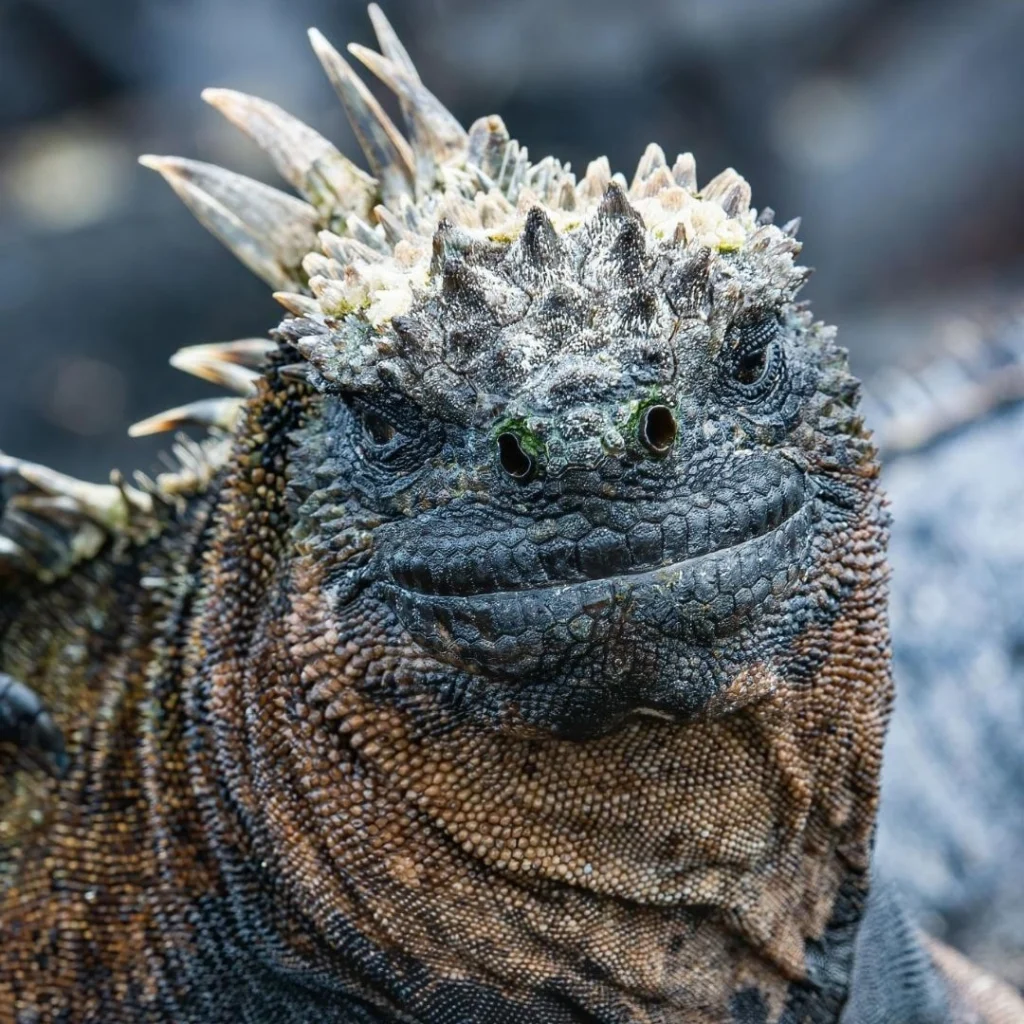
On a beach on Fernandina, any visitor will see marine iguanas. A great naturalist will show you why they lie flattened against the black rock in the morning and raised on their legs at noon, why the largest ones dive while the young graze between the tides, and why, during a strong El Niño, they can shrink their own skeleton to survive. The animal is the same. The encounter is not.
What changes during your voyage
- Timing. An experienced naturalist knows when a colony is most active, which side of an island the light will favor, and when to wait a few more minutes because something is about to happen.
- Context. Each landing becomes a chapter: the geology that formed the island, the current that feeds its waters, the evolutionary story of the species that live there.
- Questions. You can ask anything, from the age of a tortoise to the history of the first settlers, and receive an answer drawn from the field rather than from a script.
- Respect. A guide who knows the animals intimately keeps the right distance without breaking the moment, so that you see natural behavior rather than an animal disturbed by your presence.
Born here, not trained here
Some knowledge cannot be taught in a classroom. Samuel and John were born on San Cristóbal and grew up among sea lions and frigatebirds long before they guided their first visitors. That is the difference our guests most often describe after their voyage: the feeling of being shown the islands by people for whom they are home.
The same guides, whichever vessel you choose
Aboard La Pinta or the Galápagos Legend, the ship sets the standard of comfort. Our naturalists set the standard of understanding. Samuel or John prepares every expedition with you, and every guest receives Samuel’s book before sailing, so that each landing begins with context rather than a first impression.
If you have one question about the islands, ask it to someone who was born there.