

Galápagos Sea Lion
Overview
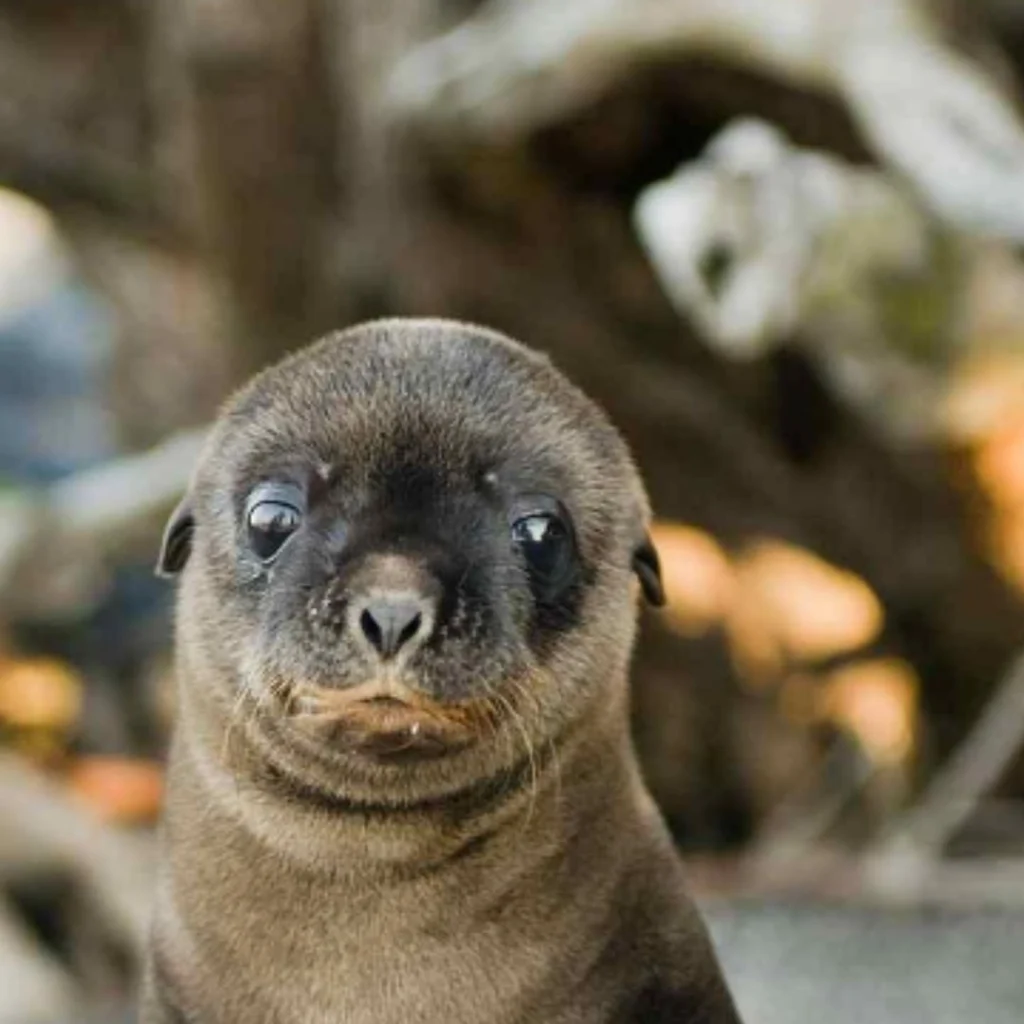
One of the most commonly encountered and endearing Galápagos animals, found lounging on beaches, piers, and even park benches across the islands.
Physical Characteristics
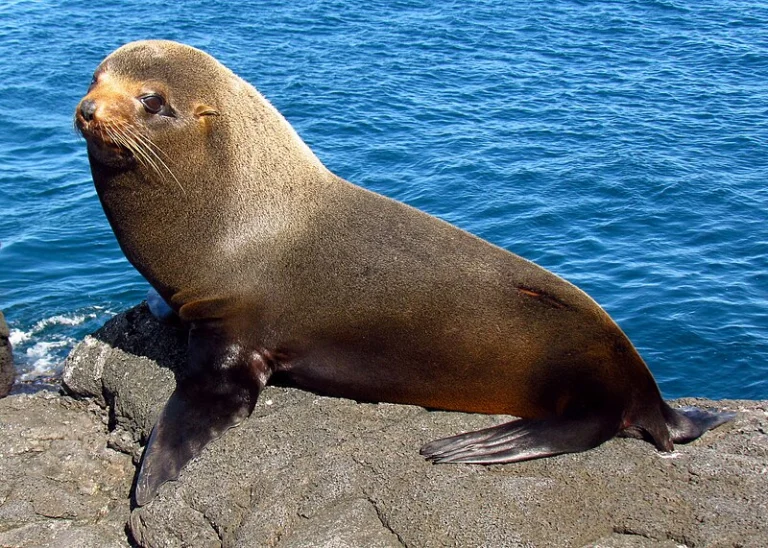
Males are considerably larger than females — up to roughly 250 kg compared with around 100 kg — and mature bulls develop a pronounced bump on the forehead called a sagittal crest. Fur is short and coarse, appearing brown when dry and sleek and dark when wet, and their powerful front flippers make them agile swimmers.
Habitat
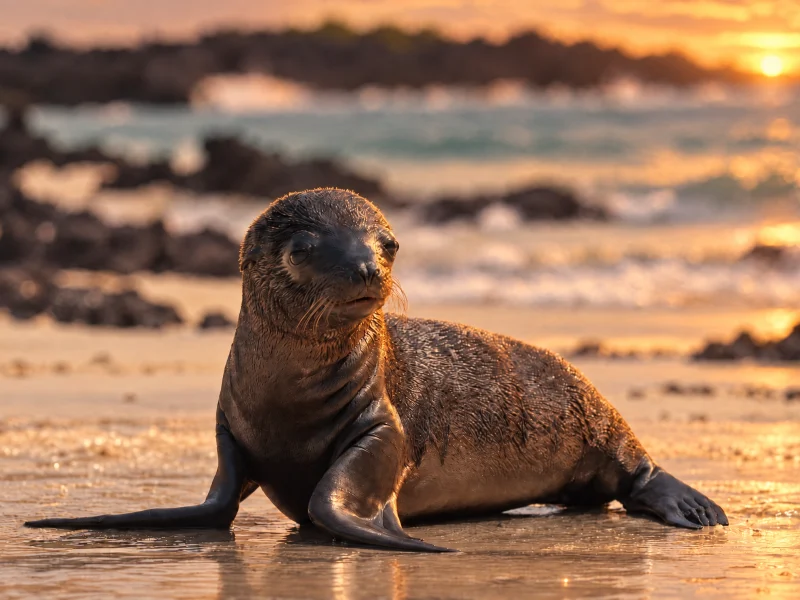
Sandy beaches, rocky shorelines, and shallow coastal waters throughout the archipelago.
Distribution
Endemic to the Galápagos, found on nearly every island with suitable beach habitat.
Diet
Mainly sardines and other small schooling fish, along with squid.
Hunting Behaviour
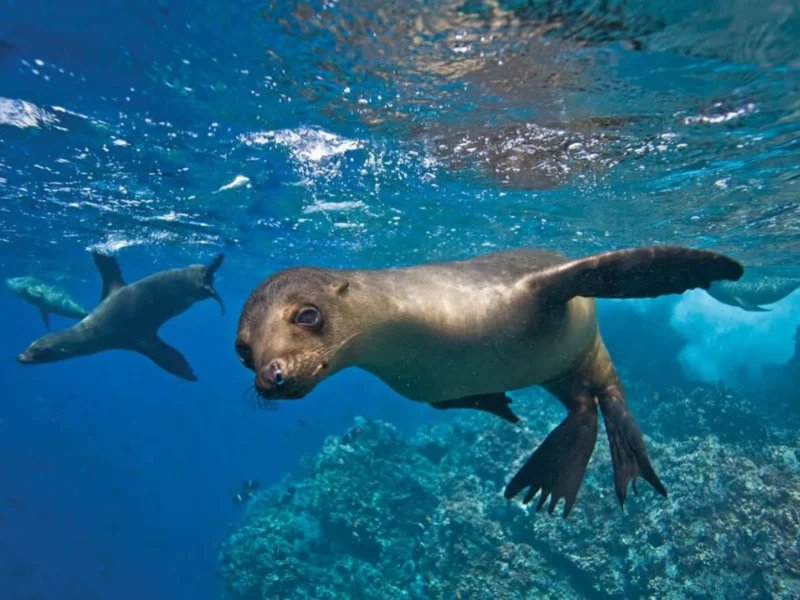
Agile underwater hunters that often forage cooperatively; juveniles practice hunting skills through play, and adults occasionally take advantage of other opportunistic prey, though fish make up the bulk of the diet.
Reproduction
Breeding season generally runs from September to January. A single pup is born after a gestation of roughly nine months and may nurse for a year or longer. Dominant “beachmaster” bulls defend territories and harems of females for the duration of the season.
Social Behaviour
Highly social, forming colonies on beaches, and often playful and curious around snorkelers.
When to Observe It
Present and easily seen year-round at nearly every visitor beach site in the islands.
Evolution
Thought to have descended from California sea lion ancestors that colonized the islands; isolation over time led to its recognition as a distinct, endemic species.
Conservation
Listed as Endangered by the IUCN. El Niño-driven food shortages can cause significant pup mortality in some years, and the species also faces risks from disease and human disturbance.
Galápagos Connection
Among the most reliably encountered species on any Galápagos itinerary, and for many visitors the most memorable close-up wildlife interaction of the journey.
Naturalist Insight
Beachmaster bulls patrol their territory almost constantly through the breeding season, barking to warn off rivals and often losing significant body condition over weeks of near-continuous vigilance. It is a costly strategy that limits how long any single bull typically holds a prime stretch of beach.
At a Glance
| Scientific Name | Zalophus wollebaeki |
|---|---|
| Typical Size | Males up to ~250 kg, females up to ~100 kg |
| Diet | Sardines and other small schooling fish, squid |
| Conservation Status | Endangered (IUCN) |
Observe it on
More Species to Discover
A lifetime of Galápagos knowledge, gathered into one ebook.
Receive the EbookCurated by naturalists born in the Galápagos — see who's behind this knowledge