

Santiago Island
Overview
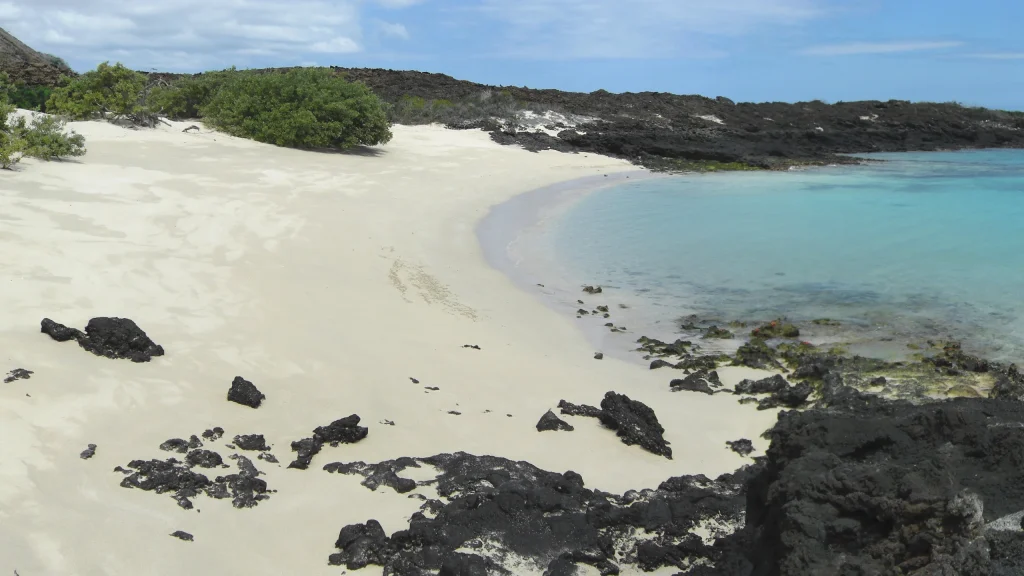
The fourth-largest island in the Galápagos, Santiago carries a varied volcanic history and a more recent past shaped by salt mining and, later, feral goats that have since been fully eradicated.
Geology & Formation
Built from overlapping lava flows of different ages, giving the island a textured, varied volcanic landscape.
Landscape
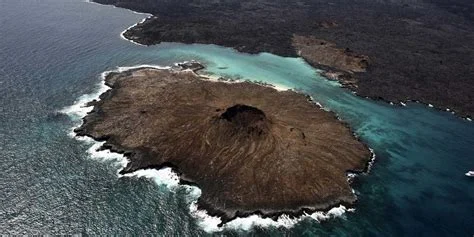
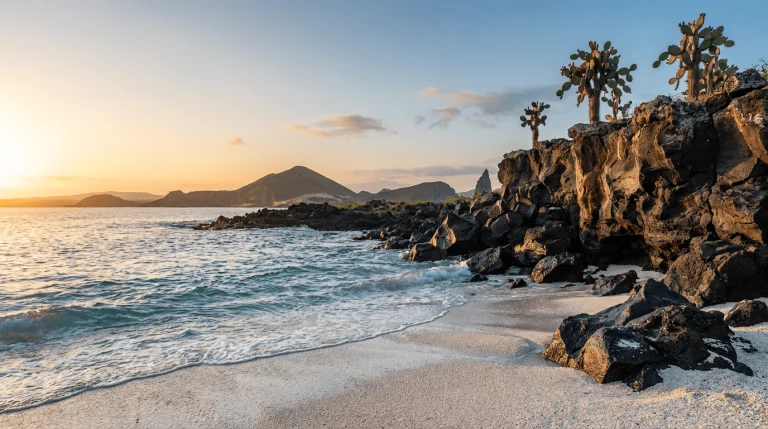
Black lava fields — including a notably recent flow at Sullivan Bay — alongside sandy beaches and tidal pools.
Wildlife You May Encounter
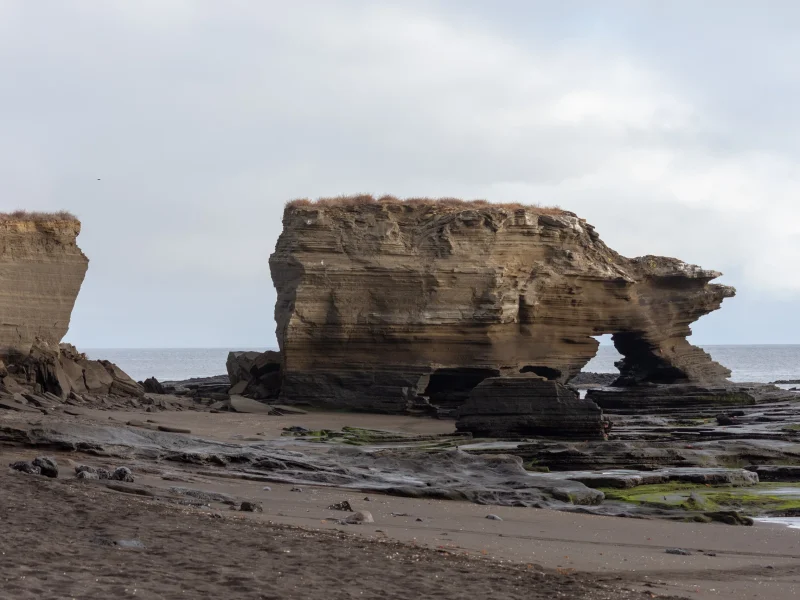
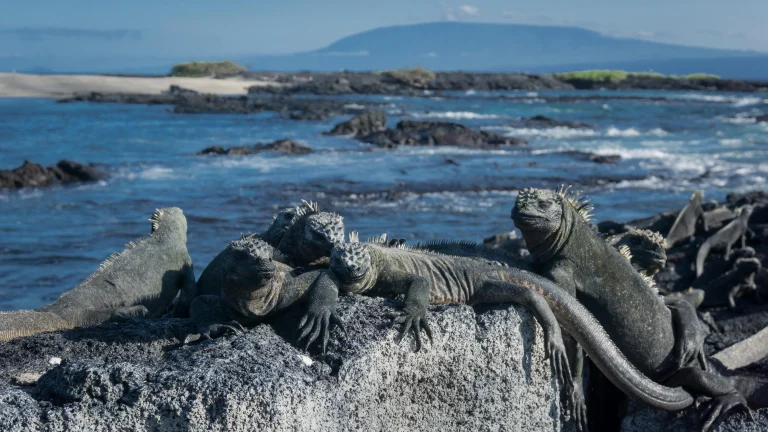
Marine iguanas and Galápagos fur seals gather around Puerto Egas, while Galápagos hawks and a range of shorebirds and herons frequent the island’s tidal pools.
Visitor Sites
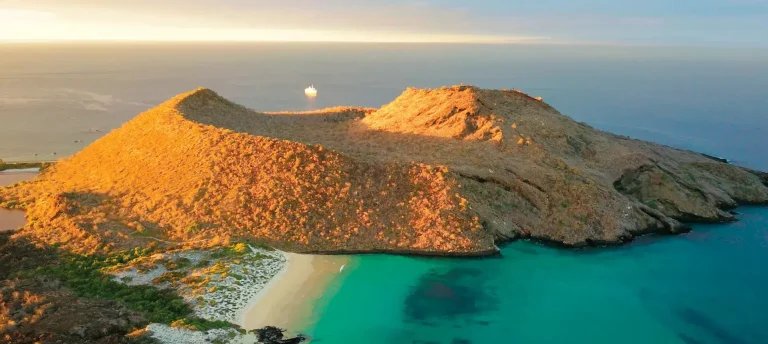
Sullivan Bay’s pahoehoe lava field, Puerto Egas (fur seal grottoes and tide pools), and Espumilla Beach.
Naturalist Insight
The pahoehoe lava field at Sullivan Bay still preserves ropey textures and tree-mold impressions from a flow estimated at only around a century old — one of the most recent and best-preserved lava flows visitors can walk across anywhere in the islands.
At a Glance
| Highlights | Sullivan Bay lava field, Puerto Egas, Espumilla Beach |
|---|---|
| Best For | Recent lava flows, fur seals, tide pools |
More Islands to Discover
A lifetime of Galápagos knowledge, gathered into one ebook.
Receive the EbookCurated by naturalists born in the Galápagos — see who's behind this knowledge
Photo credits: Sullivan Bay, Santiago Island — Jason Hollinger, CC BY 2.0, via Wikimedia Commons · Puerto Egas, Santiago Island — Nicolas Völcker, CC BY-SA 4.0, via Wikimedia Commons