

Blue-footed Booby
Overview
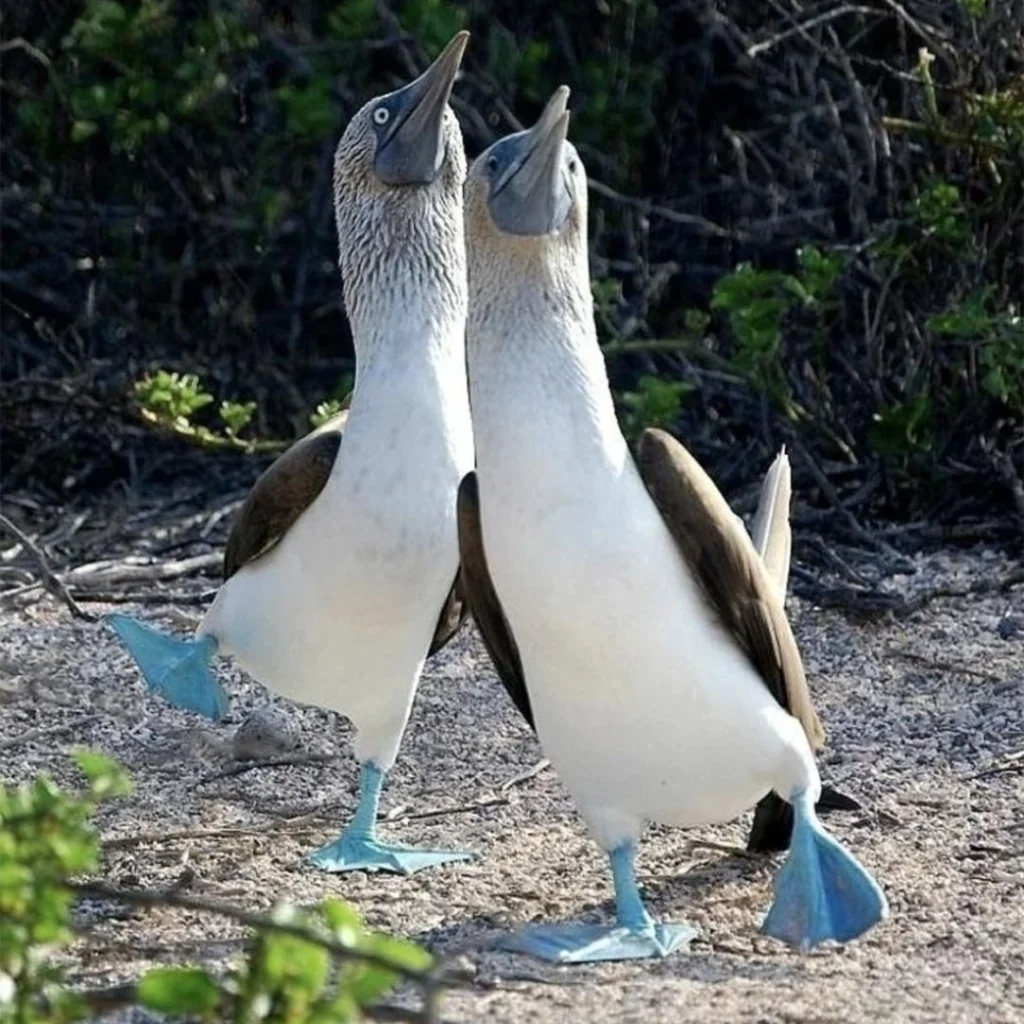
One of the most recognizable Galápagos seabirds, known for its bright blue feet and an elaborate courtship dance that has made it a favorite among visitors.
Physical Characteristics
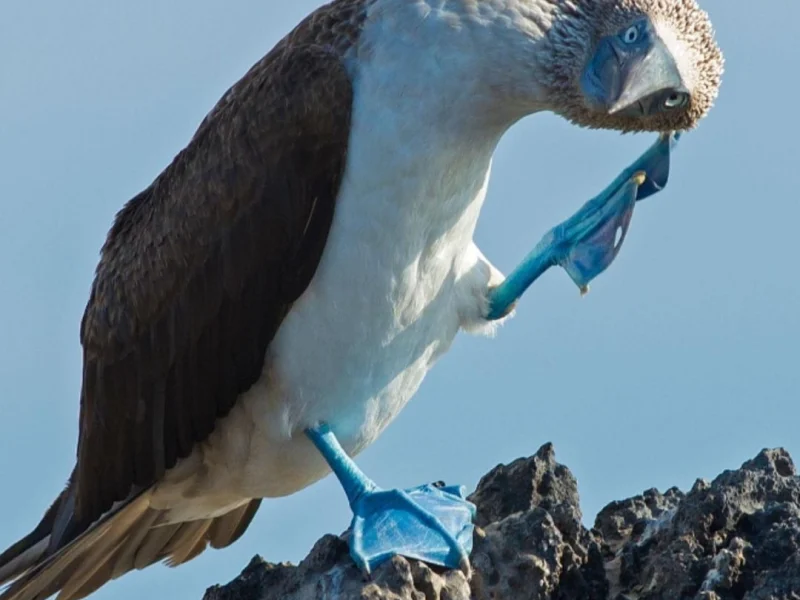
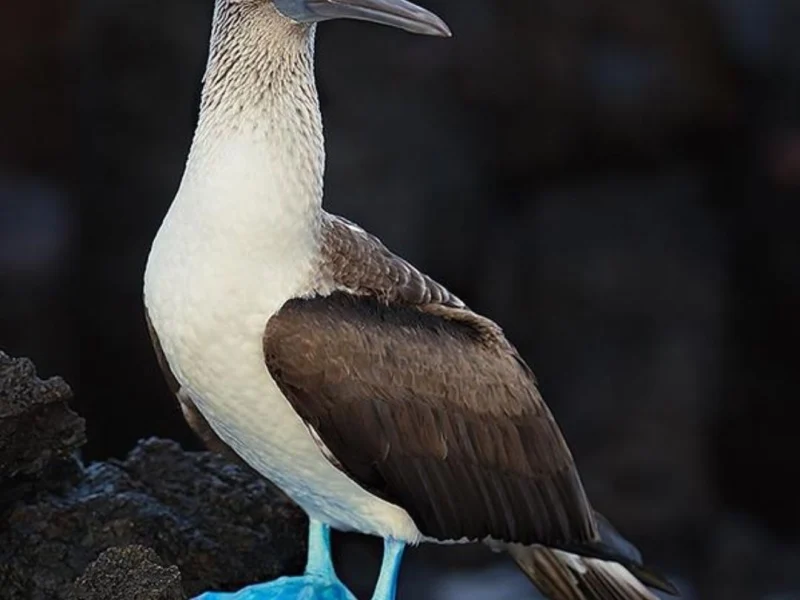
A brown-mottled body with a white underside and a wingspan of roughly 1.5 metres. Its namesake feature — vividly blue, webbed feet — comes from carotenoid pigments obtained through its diet, and the intensity of the color reflects the bird’s current health and feeding success.
Habitat
Nests on open coastal cliffs and bare ground near the shore; forages over open ocean.
Distribution
Ranges along the eastern Pacific from California to Peru. The Galápagos hosts one of the largest breeding populations anywhere in this range, notably on Española and North Seymour.
Diet
Small schooling fish such as sardines and anchovies.
Hunting Behaviour
Hunts by plunge-diving from heights of up to 24 metres, folding its wings back at the last moment to knife into the water at speed. Birds often hunt in loose groups, converging on schools of fish located from the air.
Reproduction
Lays one to three eggs directly on bare ground, incubating them under its webbed feet rather than a brood patch. In years of food scarcity, the older chick may outcompete or displace younger siblings.
Courtship
Famous for its high-stepping dance that shows off its blue feet, paired with a sky-pointing display and mutual bill-touching. Because foot color fades quickly if a bird’s diet quality drops, it functions as an honest, near real-time signal of condition to prospective mates.
When to Observe It
Present year-round, with courtship displays especially visible during the main breeding period, which shifts somewhat from year to year depending on food availability.
Evolution
Comparisons between Galápagos and mainland populations have long interested researchers studying how isolation shapes seabird behavior and colony structure.
Conservation
Listed as Least Concern by the IUCN, though some colonies have experienced breeding failures during strong El Niño years when warm water disperses the schooling fish they depend on.
Galápagos Connection
Among the most requested and photographed wildlife sightings in the islands, and a near-guaranteed encounter on itineraries that include Española or North Seymour.
Naturalist Insight
A male’s foot color can visibly dull within days of a drop in diet quality. Because females appear to assess this signal when choosing a mate, blue-footed boobies are one of the clearest documented examples in the animal kingdom of an “honest” visual signal that cannot easily be faked.
At a Glance
| Scientific Name | Sula nebouxii |
|---|---|
| Typical Size | Length ~80 cm, wingspan ~1.5 m |
| Diet | Small schooling fish |
| Conservation Status | Least Concern (IUCN) |
Observe it on
More Species to Discover
A lifetime of Galápagos knowledge, gathered into one ebook.
Receive the EbookCurated by naturalists born in the Galápagos — see who's behind this knowledge