

On San Cristóbal, the easternmost island of the archipelago, sea lions sleep on the benches of the waterfront and frigatebirds circle above the port. For most visitors, it is a first astonishment. For Samuel Quiroz and John Zavala, it was simply the view from home.
An island as a classroom
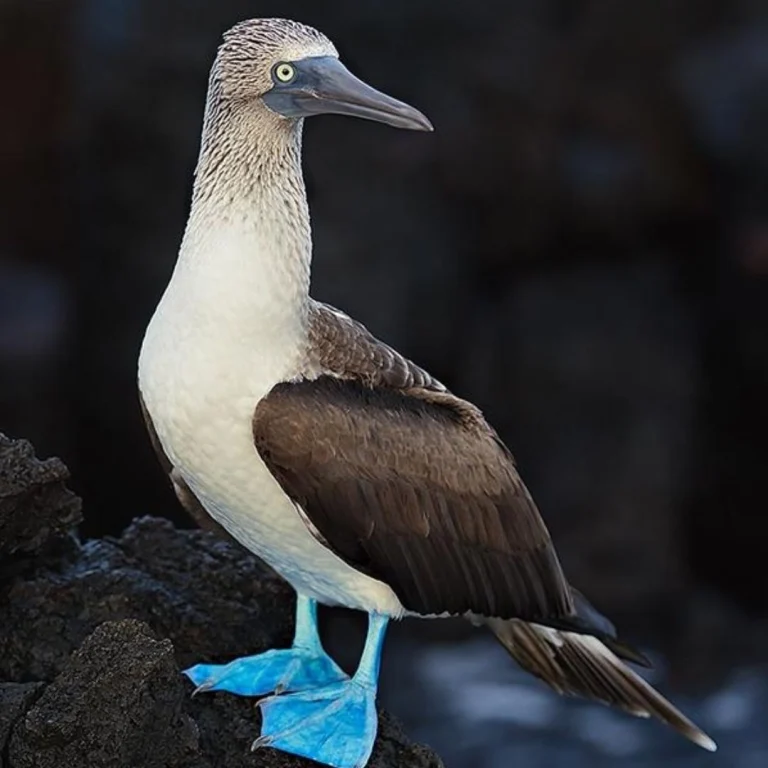
Both were born and raised on San Cristóbal. As children, they spent countless hours on the beaches near town, among sea lion pups, marine iguanas and the boobies diving offshore. Long before they had words for adaptation or endemism, they knew which rocks the iguanas preferred in the morning, when the young sea lions were most playful, and how the sea changed when the cool season arrived.
That kind of knowledge is not learned in a few seasons of work. It is absorbed over a lifetime, and it gives a naturalist something no training can replace: an instinct for what is about to happen.
From a childhood to a vocation
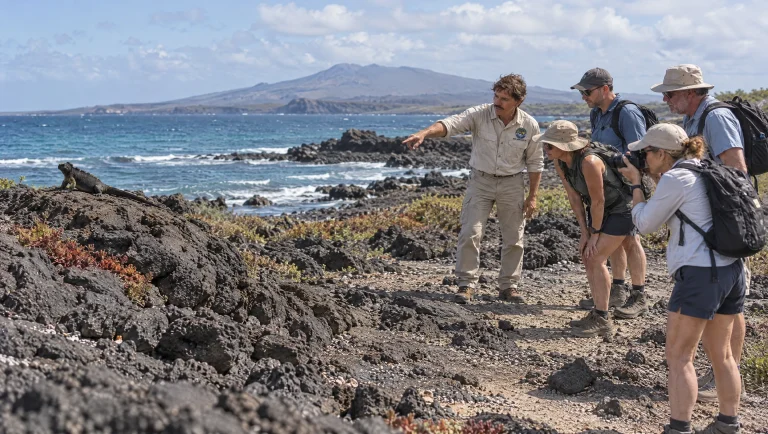
Curiosity became a vocation. Both studied Biological Sciences; Samuel became a marine biologist. For more than three decades they have guided travelers through the archipelago, aboard different vessels and across every island, and both hold the Galápagos National Park’s Level III naturalist license, its highest.
Samuel has a particular bond with the coast of his island, and above all with Kicker Rock, León Dormido, the twin volcanic pinnacles rising from the sea off San Cristóbal. Over the years he turned his field knowledge into a book on the wildlife of the Galápagos, the only one written by a naturalist born in the islands, which every one of our guests receives before sailing.
A responsibility, not only a privilege
Growing up in such a place teaches something else too: that it is fragile. The islanders of San Cristóbal have watched the work of protecting the archipelago unfold around them, from the giant tortoise breeding center of Cerro Colorado to the strict rules that keep visitor sites intact. For Samuel and John, sharing the islands has always been inseparable from protecting them.
Why it matters for your voyage
When you sail with Galápagos Redefined, your expedition is prepared and guided by people for whom the islands are home. They know the animals as neighbors, the landscapes as the places of their childhood, and the history as their own family’s. It shows in the details: a detour to a quieter beach, a story about the first settlers, the patience to wait for a behavior they know will come.
Galápagos Redefined was born from that conviction: that the people best placed to reveal the islands are those who were born there, and that the value these islands create should stay with the people who protect them.