

Española Island
Overview
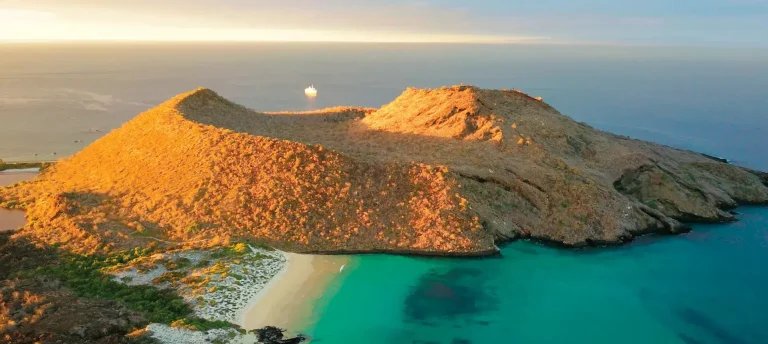
Española is the oldest island in the Galápagos archipelago, its volcanic shield estimated at nearly four million years of age — old enough that erosion has worn its profile low and flat, in sharp contrast to the younger, steeper cones still forming in the archipelago’s west.
Geology & Formation
The island sits furthest from the hotspot that continues to feed volcanic activity beneath Fernandina and Isabela, having drifted southeast atop the Nazca Plate at a rate of roughly five centimetres a year — the same slow conveyor that will one day carry every island in the chain to the same fate of quiet, eroded age.
Landscape
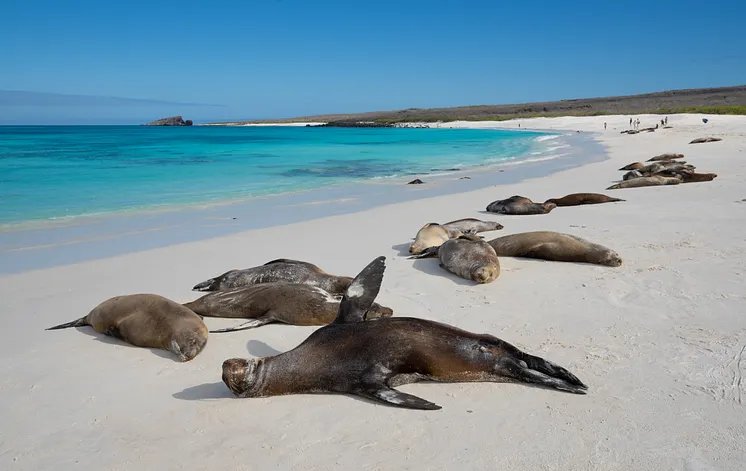
Low, flat, and largely treeless, Española’s terrain is dominated by wind-scoured lava and, at Gardner Bay, one of the archipelago’s finest stretches of white coral sand.
Wildlife You May Encounter
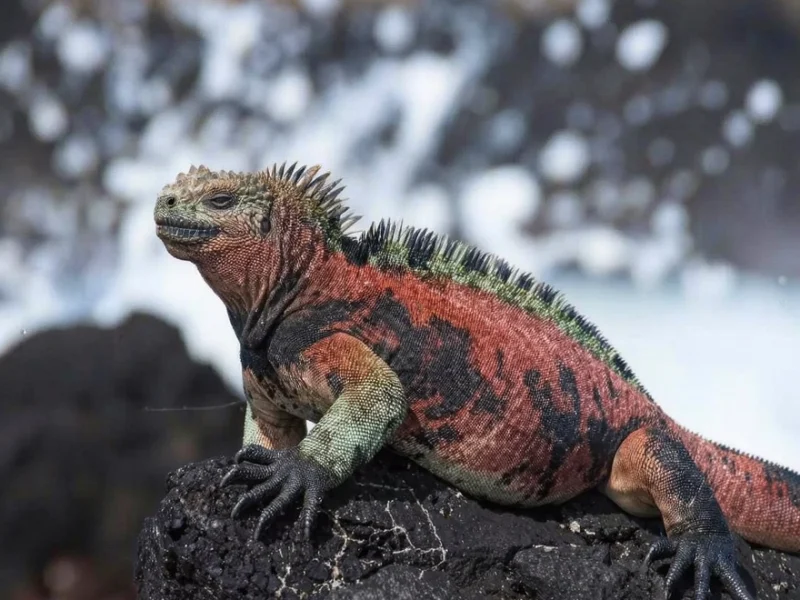
Española’s isolation and age are precisely what allowed the waved albatross to evolve here and nowhere else — Punta Suárez, at the island’s western tip, remains the species’ only significant breeding ground on the planet. The island also hosts its own endemic subspecies of marine iguana, males of which turn vivid red and green during the breeding season, and the Española mockingbird, found nowhere else. Blue-footed and Nazca boobies nest along the cliffs, and Galápagos sea lions haul out in numbers on Gardner Bay’s beach.
Visitor Sites
Punta Suárez combines dramatic blowholes and cliffside seabird colonies in a single walk, while Gardner Bay offers calm, shallow water for snorkeling alongside sea lions and a beach often ranked among the best in the islands.
Naturalist Insight
Because Española is both the oldest island and one of the most isolated from the others, several of its residents — the mockingbird, the marine iguana’s breeding coloration, the waved albatross itself — evolved distinctly enough to be found only here, making the island a small-scale illustration of the same isolation-driven divergence that shaped the whole archipelago.
At a Glance
| Age | Roughly 4 million years — the oldest island |
|---|---|
| Highlights | Waved albatross, Gardner Bay, Punta Suárez |
| Best For | Seabird colonies, snorkeling with sea lions |
More Islands to Discover
A lifetime of Galápagos knowledge, gathered into one ebook.
Receive the EbookCurated by naturalists born in the Galápagos — see who's behind this knowledge