

Nazca Booby
Overview
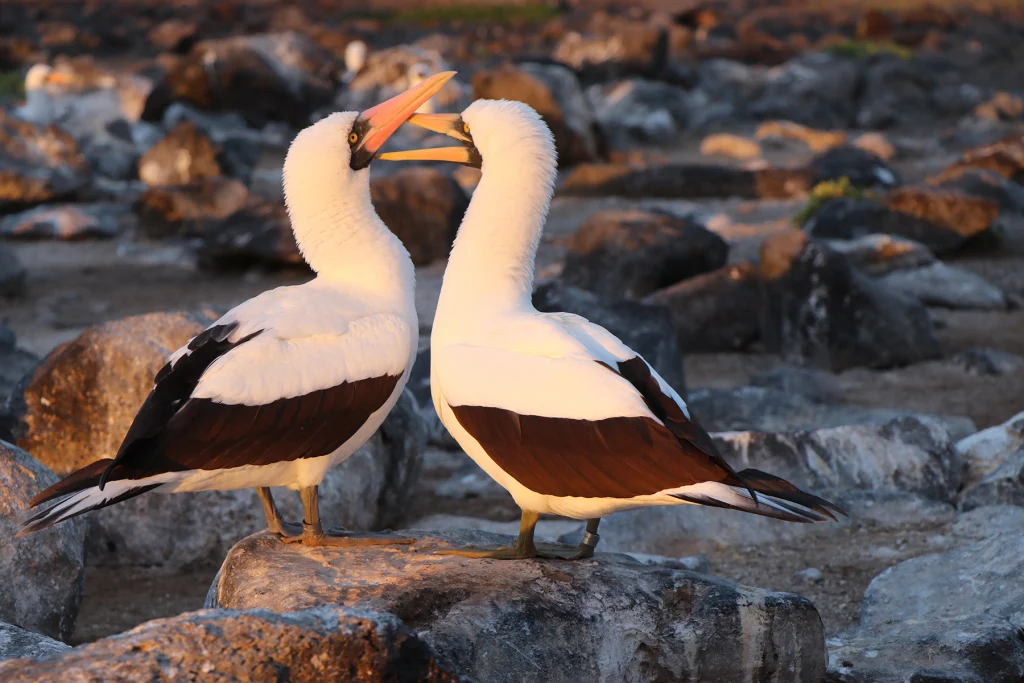
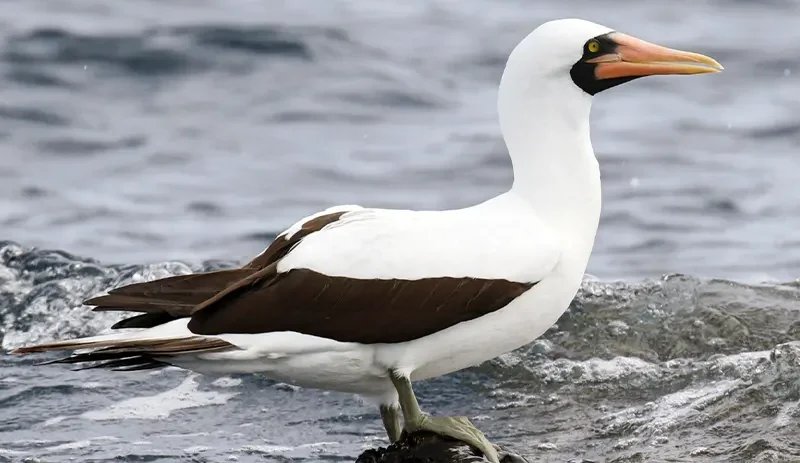
The largest of the Galápagos booby species, with all-white plumage, black flight feathers, and a distinctive orange-pink bill.
Physical Characteristics
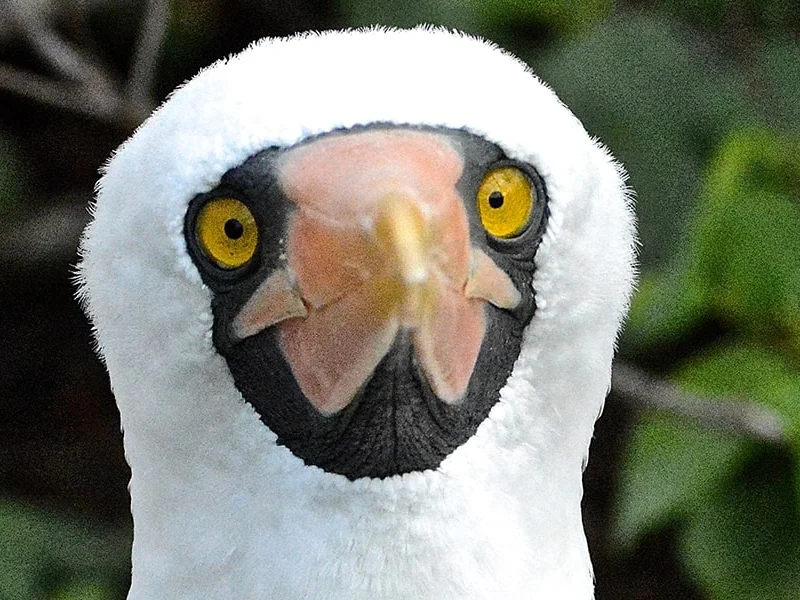
A stocky white body with black wingtips and tail, a long pointed bill, and a dark facial mask around the eyes. Noticeably larger than the blue-footed or red-footed booby.
Habitat
Nests on open, flat or gently sloping ground on cliff tops and coastal plains.
Distribution
Breeds on several Galápagos islands and a handful of other eastern Pacific sites; Española hosts one of the largest known colonies.
Diet
Mainly flying fish and squid.
Hunting Behaviour
Plunge-dives from considerable height, often foraging further offshore than the smaller blue-footed booby.
Reproduction
Typically lays two eggs, but the species is known for obligate siblicide: the first chick to hatch usually pushes the second out of the nest within days, regardless of how much food is available. It is a strategy that trades brood size for a near-certain single survivor.
Courtship
Pairs perform sky-pointing and bill-fencing displays, and often reunite at the same nest site across successive breeding seasons.
When to Observe It
Breeding activity can be seen for much of the year on Española, though timing varies between colonies.
Evolution
Long classified as a subspecies of the masked booby, it was later recognized as its own species, Sula granti, based on genetic and plumage differences — an example of how taxonomy in the region continues to be refined as research advances.
Conservation
Listed as Least Concern by the IUCN, with colonies monitored for sensitivity to El Niño-driven shifts in fish availability.
Galápagos Connection
Punta Suárez and Punta Pitt are well-known visitor sites for observing Nazca booby colonies alongside other seabirds.
Naturalist Insight
The obligate siblicide seen in this species — where the firstborn chick reliably evicts its sibling within days — is one of the starkest “insurance egg” strategies documented in birds, and Española’s colonies have been studied for decades to understand exactly how and why it evolved.
At a Glance
| Scientific Name | Sula granti |
|---|---|
| Typical Size | Length ~90 cm — the largest Galápagos booby |
| Diet | Flying fish and squid |
| Conservation Status | Least Concern (IUCN) |
Observe it on
More Species to Discover
A lifetime of Galápagos knowledge, gathered into one ebook.
Receive the EbookCurated by naturalists born in the Galápagos — see who's behind this knowledge