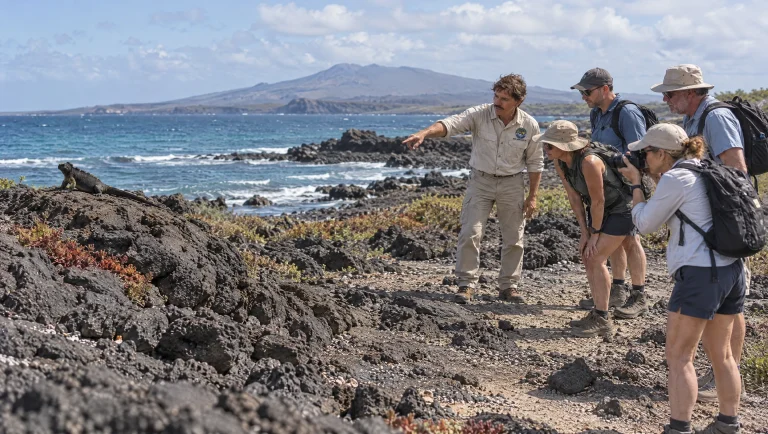

Two people can walk the same trail on North Seymour and come back with two different islands. One has seen boobies, iguanas and sea lions. The other has understood who is courting whom, which bull is defending which beach, and why the frigatebirds are gathering on that particular bush. The difference is not luck. It is the habit of reading small signs, a habit our naturalists have practiced since childhood. Here are a few of them.
Listen before you look
Among blue-footed boobies, the sexes look almost identical, yet you can tell them apart with your eyes closed: the male whistles, the female honks. Listen during a courtship display and you will know who is dancing for whom. Look closer, too: the female’s pupil appears larger, ringed by a darker iris.
The color of the feet
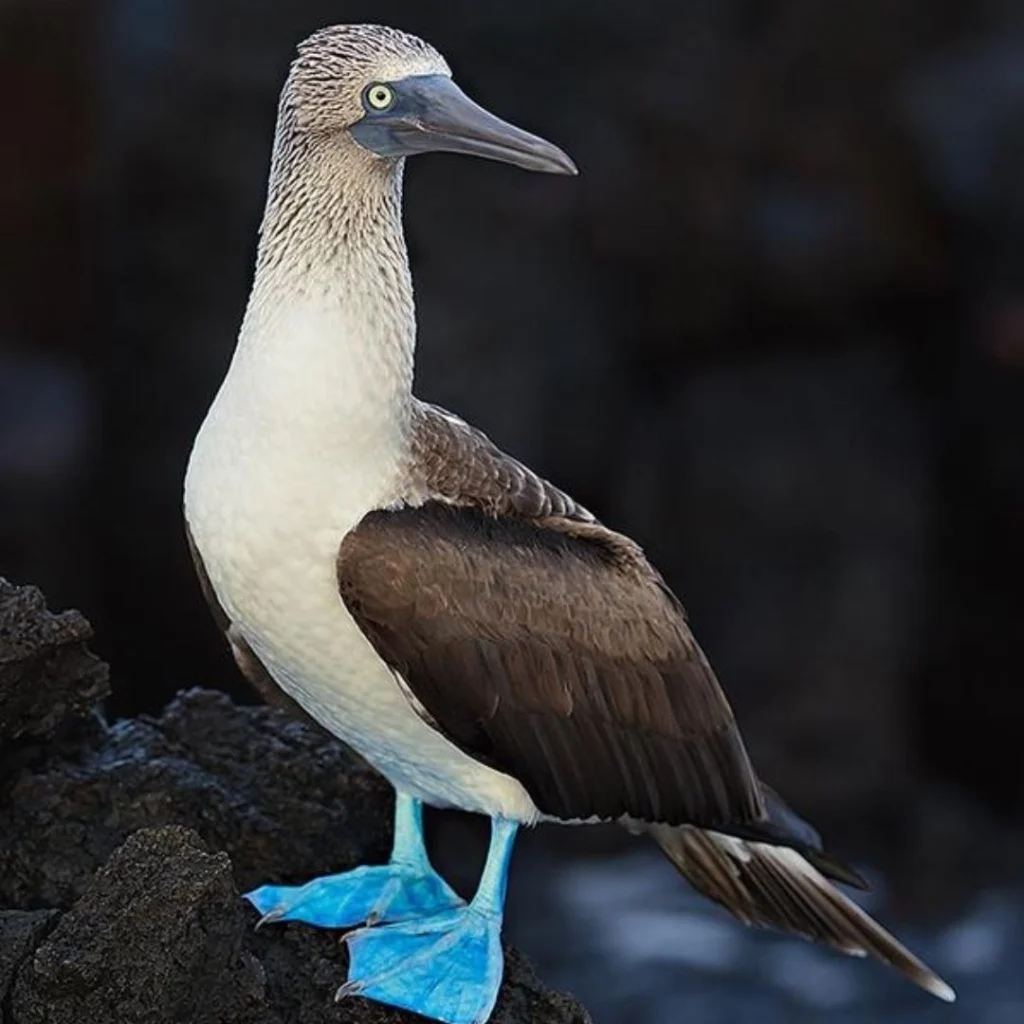
The blue of a booby’s feet comes from pigments in the fish it eats, and it fades within days if the bird feeds poorly. A pair with vividly blue feet is a pair that has been fishing well; a colony of pale feet often signals a lean season at sea. Without a single word, the colony tells you how the ocean is doing.
The sneeze of a marine iguana
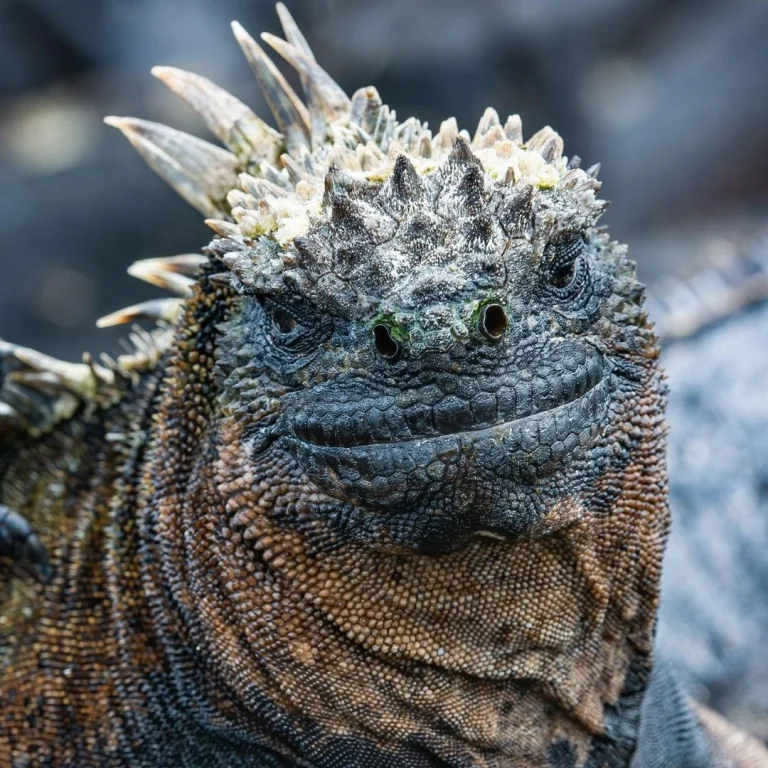
If a marine iguana seems to sneeze in your direction, it is not a warning. Feeding on algae in the sea, it swallows far more salt than it needs, and expels the excess through glands near its nostrils. The white crust on its head is dried salt. An iguana that sneezes has recently come out of the water.
The bark at the water’s edge
A large male sea lion swimming back and forth along a beach, barking, is not being friendly. He is a territorial bull, patrolling his stretch of shore and its females. A good naturalist keeps the group away from his path and positions you where you can watch the patrol without crossing it. Pups, by contrast, are often alone on the sand while their mothers fish: they have not been abandoned, and should never be approached or touched.
The red balloon in the bushes
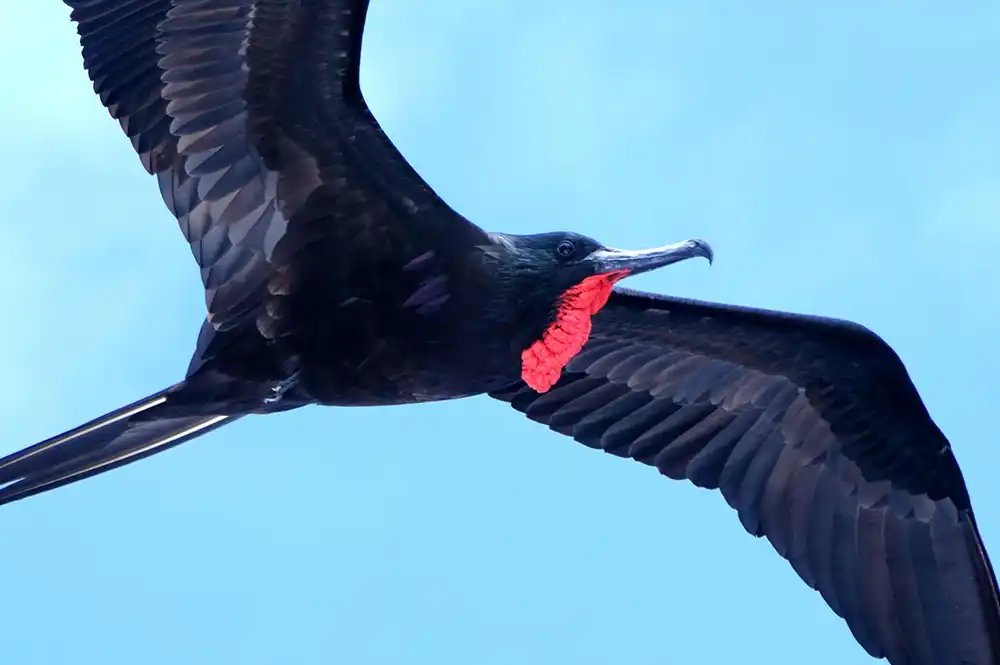
When male frigatebirds gather on low shrubs and inflate their red throat pouches, look up rather than at them. The display is aimed at females flying overhead, and the moment a female descends to choose a male is one of the most fleeting scenes of the islands. Knowing where to look is half of seeing it.
The landscape tells time
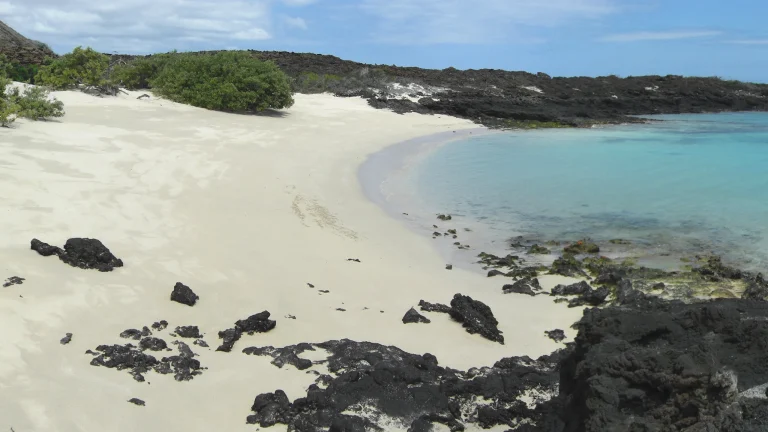
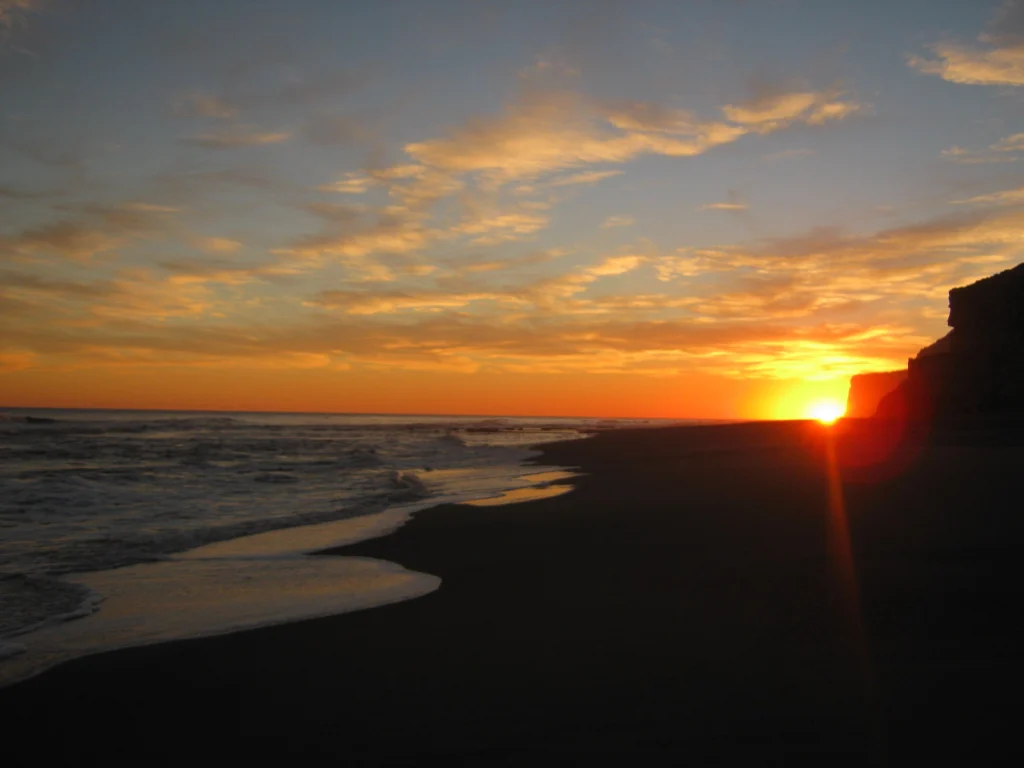
Smooth, rope-like lava with almost no plants, as at Sullivan Bay, is young, sometimes only a century old. Red, crumbling cinder covered in vegetation is far older. In the east, the islands are low and eroded; in the west, they are high, black and still active. Every landing is also a page of geological history, written in the ground beneath your feet.
Why it matters
Reading these signs turns a list of sightings into an understanding of how the islands work, and that understanding is what our guests remember long after the photographs. It is also how we keep our distance with intelligence: knowing what an animal is doing tells us how close we can be without changing it.
On every expedition, Samuel or John reads the islands with you, landing after landing.