

Genovesa Island
Overview
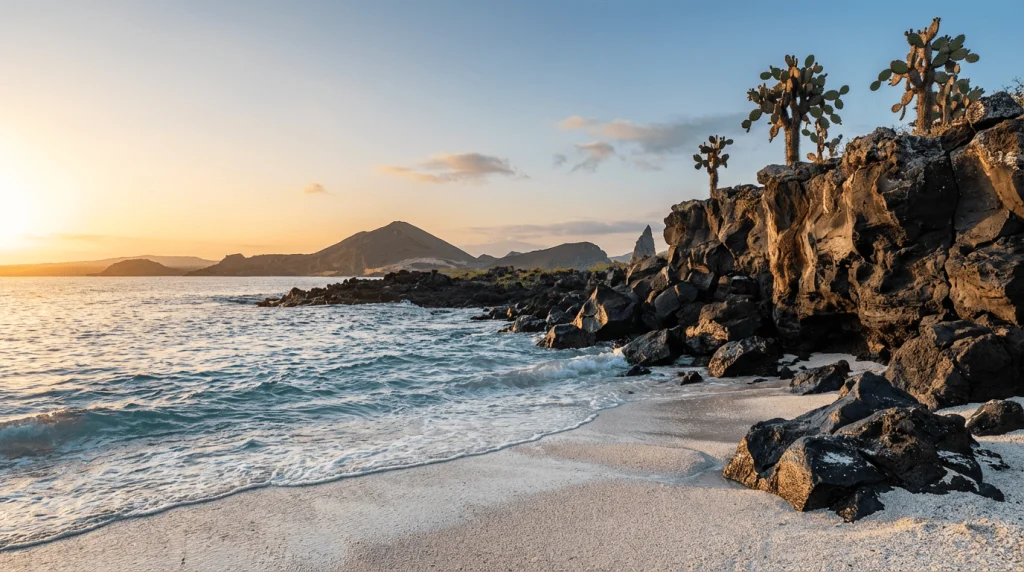
Known as “Bird Island,” Genovesa is one of the most important seabird breeding sites in the Galápagos, formed by a partially collapsed volcanic caldera.
Geology & Formation
The island is essentially the exposed rim of a collapsed caldera — Darwin Bay, where most visits begin, sits within the crater itself.
Landscape
Cliffs, rocky shoreline, and low scrub vegetation well suited to ground- and shrub-nesting seabirds.
Wildlife You May Encounter
Large colonies of red-footed and Nazca boobies, frigatebirds, and storm-petrels. Short-eared owls hunt petrels here during daylight, an unusual habit for an owl, and the swallow-tailed gull — the world’s only fully nocturnal gull — nests on the cliffs.
Visitor Sites
Darwin Bay and Prince Philip’s Steps (El Barranco), a steep trail up to a plateau dense with nesting seabirds.
Naturalist Insight
The swallow-tailed gull’s nocturnal habits are thought to let it feed on squid and fish that rise closer to the surface at night, avoiding direct competition with the many daytime-hunting seabirds that share Genovesa’s cliffs.
At a Glance
| Highlights | Darwin Bay, Prince Philip's Steps, major seabird colonies |
|---|---|
| Best For | Red-footed and Nazca boobies, frigatebirds, swallow-tailed gulls |
More Islands to Discover
A lifetime of Galápagos knowledge, gathered into one ebook.
Receive the EbookCurated by naturalists born in the Galápagos — see who's behind this knowledge