

Isabela Island
Overview
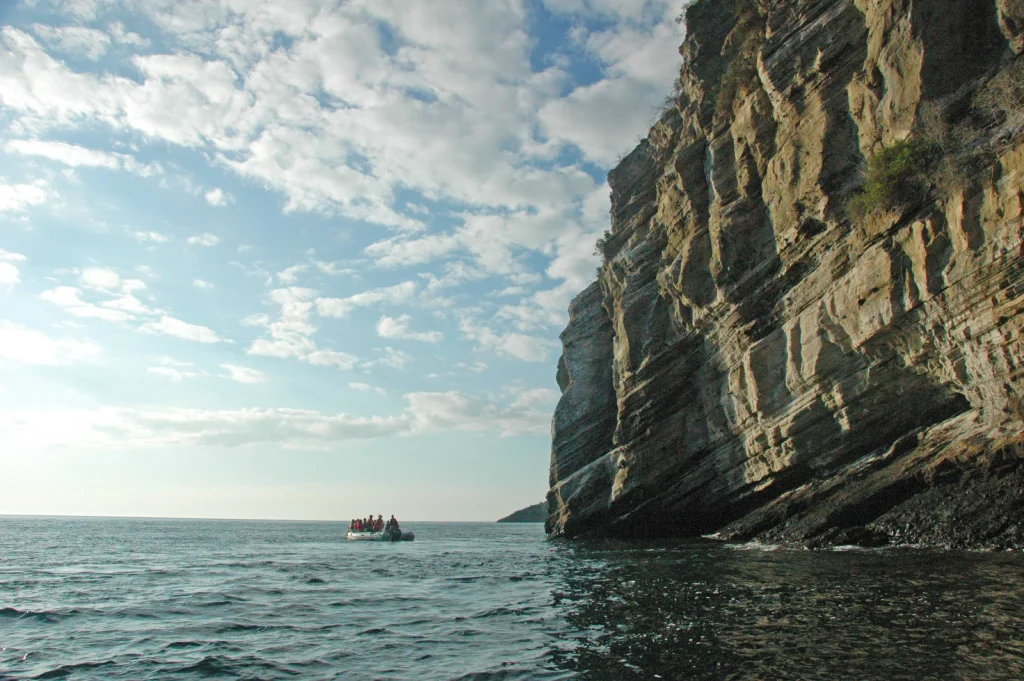
Isabela is the largest island in the Galápagos, formed by the fusion of six shield volcanoes, and home to the small port town of Puerto Villamil.
Geology & Formation
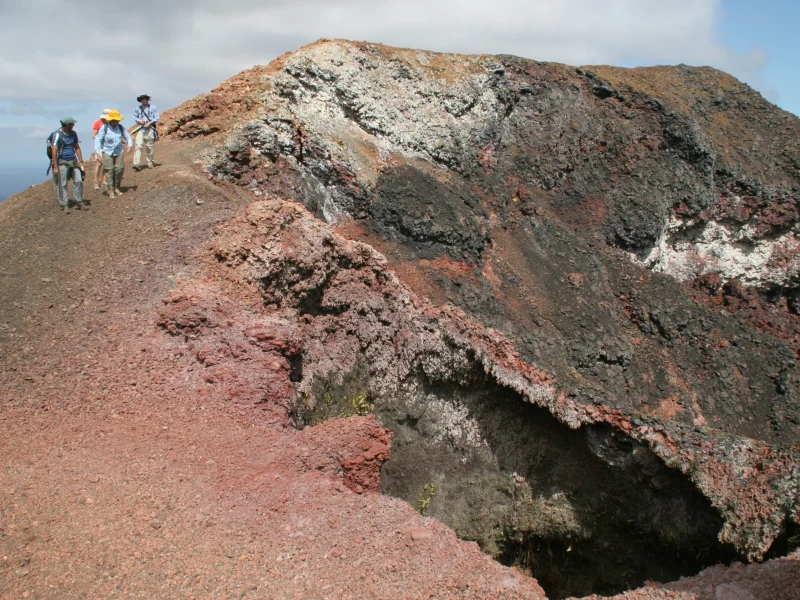
Five of Isabela’s six volcanoes remain active — Wolf, Darwin, Alcedo, Sierra Negra, and Cerro Azul — making it the most volcanically active large island in the archipelago. Wolf Volcano is the highest point in the Galápagos.
Landscape
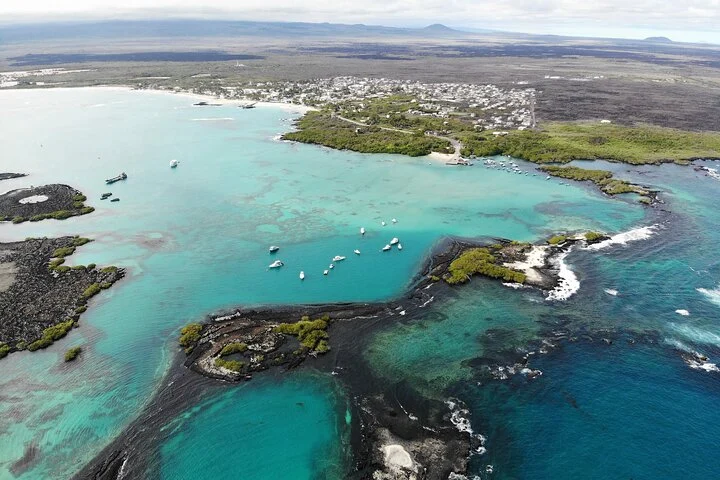
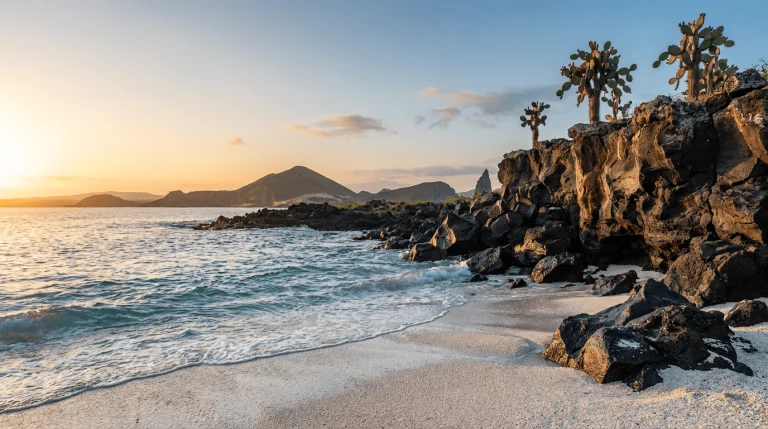
Varied and dramatic, ranging from black lava fields to mangrove lagoons and wetlands near Puerto Villamil.
Wildlife You May Encounter
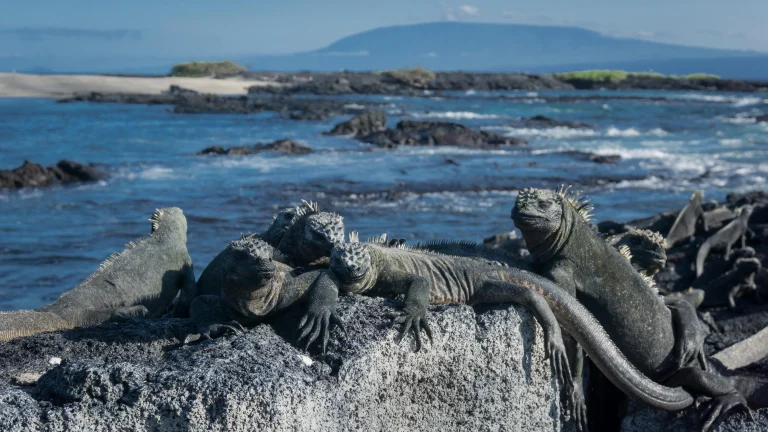
Isabela hosts several genetically distinct giant tortoise populations, one per volcano. Flightless cormorants and Galápagos penguins — both found only here and on neighboring Fernandina — share its coastline along with marine iguanas and, in coastal lagoons, flamingos.
Visitor Sites
Sierra Negra, one of the largest volcanic calderas in the world; Puerto Villamil; and Las Tintoreras, a small islet known for resting white-tip reef sharks.
Naturalist Insight
Because each of Isabela’s volcanoes rose and was colonized somewhat independently, giant tortoises on different volcanoes evolved distinct characteristics despite sharing what looks, on a map, like a single island — isolation at work even within one landmass.
At a Glance
| Highlights | Sierra Negra volcano, Tintoreras islet, Puerto Villamil |
|---|---|
| Best For | Volcanoes, flightless cormorants, Galápagos penguins |
More Islands to Discover
A lifetime of Galápagos knowledge, gathered into one ebook.
Receive the EbookCurated by naturalists born in the Galápagos — see who's behind this knowledge
Photo credits: Tagus Cove, Isabela Island — David Broad, CC BY 3.0, via Wikimedia Commons · Sierra Negra volcano, Isabela Island — Michael R Perry, CC BY 2.0, via Wikimedia Commons