

Green Sea Turtle
Overview
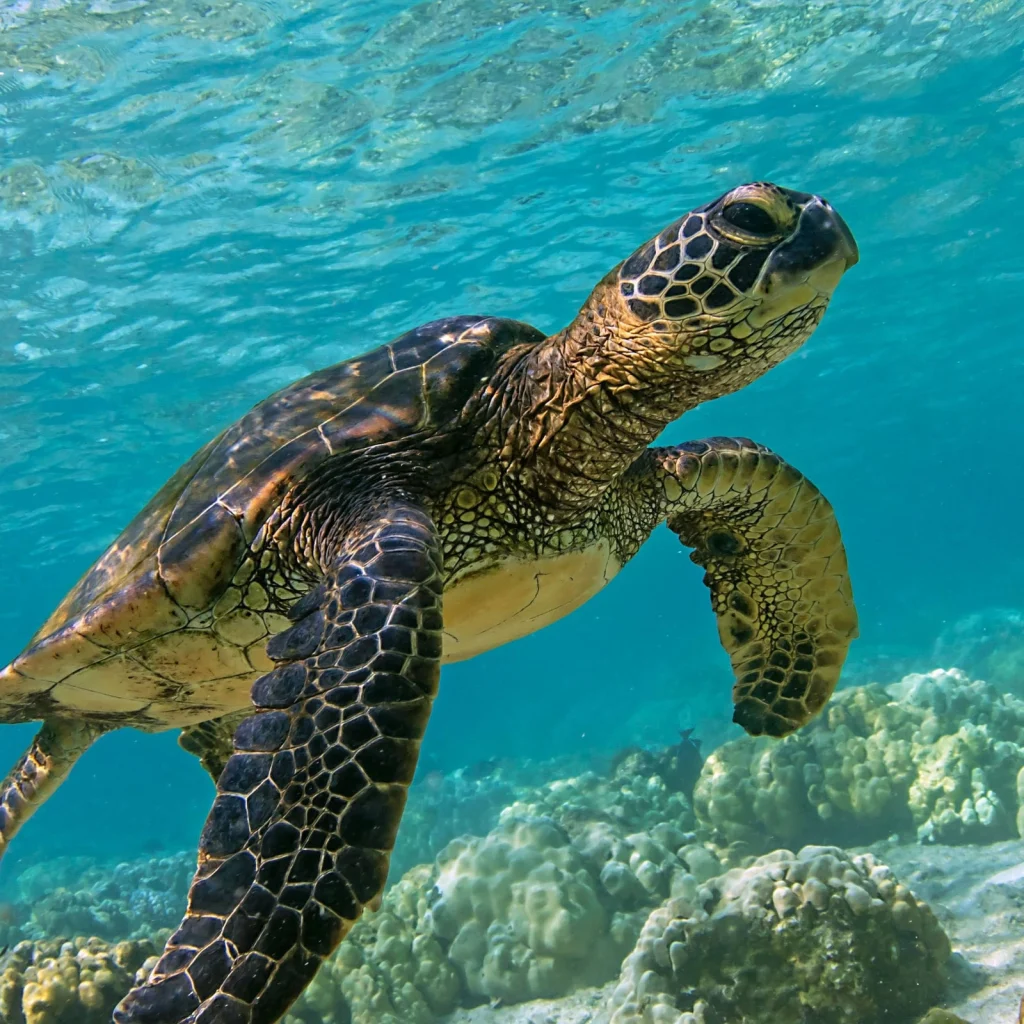
A large, widely distributed marine turtle for which Galápagos waters serve as important feeding grounds, and whose beaches on some islands provide key nesting habitat.
Physical Characteristics
A smooth, heart-shaped shell, with adults weighing between roughly 65 and 190 kg. The species takes its name not from its shell but from the greenish color of its body fat. Galápagos individuals are often somewhat darker-shelled than populations elsewhere in the species’ range.
Habitat
Coastal waters, seagrass beds, and rocky reefs for feeding; sandy beaches for nesting.
Distribution
Found throughout tropical and subtropical oceans worldwide. In the Galápagos, notable nesting beaches occur on Isabela among other islands.
Diet
Primarily herbivorous as adults, grazing on seagrasses and algae; juveniles are more omnivorous and take some invertebrates.
Feeding Behaviour
Grazes on algae-covered rocks and seagrass meadows, typically surfacing every few minutes to breathe while active, though it can hold its breath for much longer while resting.
Reproduction
Females typically return to nest on the same beaches where they themselves hatched. Nests are dug above the high-tide line, and a female may lay several clutches of roughly 70 to 120 eggs in a season, spaced years apart. Eggs incubate for about two months, and the temperature of the surrounding sand determines the sex of the hatchlings.
Courtship
Mating takes place in nearshore waters, where males sometimes compete for access to receptive females.
When to Observe It
Frequently encountered while snorkeling year-round; nesting activity in Galápagos occurs mainly during the warmer months, roughly December to June.
Evolution
Sea turtles are among the oldest surviving reptile lineages, with a fossil record stretching back tens of millions of years. The species’ broad global range contrasts with the extreme, single-island endemism seen in species such as the waved albatross — a reminder that the Galápagos hosts both highly localized and widely migratory wildlife side by side.
Conservation
Listed as Endangered by the IUCN. Historically reduced by egg poaching and hunting, the species is now mainly threatened elsewhere in its range by fishing bycatch, plastic ingestion, and coastal development; nesting beaches within the Galápagos National Park are protected.
Galápagos Connection
A regular sighting on snorkeling excursions and one of the most accessible marine wildlife encounters for visitors of any experience level.
Naturalist Insight
The sex of every green turtle hatchling in a Galápagos nest is decided not by genetics but by the temperature of the surrounding sand — warmer sand produces more females. This temperature-dependent sex determination is exactly why long-term shifts in climate are considered a particular concern for the species’ future sex ratios.
At a Glance
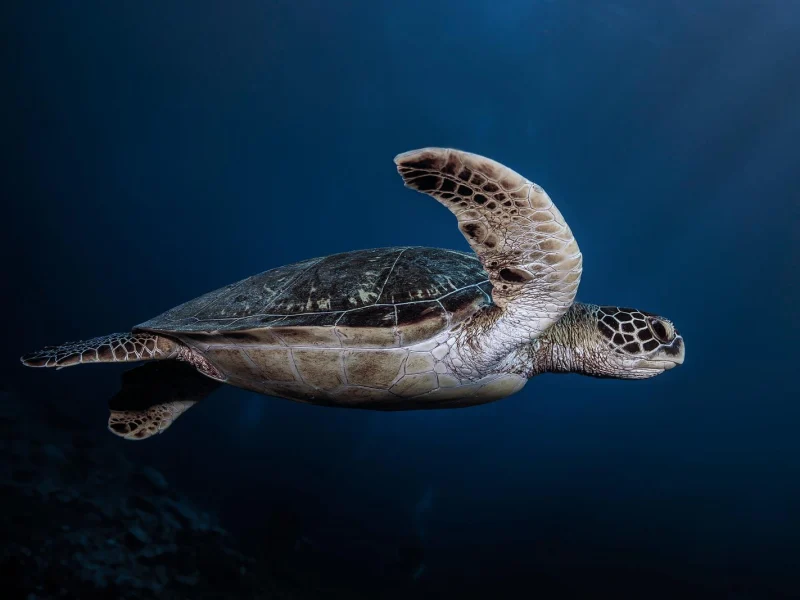
| Scientific Name | Chelonia mydas |
|---|---|
| Typical Size | 65–190 kg, shell length up to ~1.2 m |
| Diet | Seagrasses and algae (adults) |
| Conservation Status | Endangered (IUCN) |
Observe it on
More Species to Discover
A lifetime of Galápagos knowledge, gathered into one ebook.
Receive the EbookCurated by naturalists born in the Galápagos — see who's behind this knowledge